
Verified Custom Tibet Story
A Spanish Group’s Summer Logbook Through Tibet
"The group’s final khata farewell in Lhasa turned the journey into a shared memory rather than a checklist of sights."
Traveler Profile
Traveler Profile
- Traveler
- Group Traveler from Spain
- Origin
- Spain
- Traveler Type
- Group
Trip Snapshot
Trip Snapshot
- Duration
- 13
- Season
- Summer
- Travel Style
- First Tibet Visit
- Tour Type
- Custom Journey
Why Tibet
Why Tibet Became the Right Journey
Travel Challenge & How We Helped
Travel Challenge & How We Helped
Travel Challenge
How We Helped
Journey Experience
Journey ExperienceJune 2026 Field Log
Lhasa, first contact with the plateau
When the Spanish group landed in Tibet in June, the light already felt specific to the season: bright, sharp, and high. Lhasa gave them a warm daytime welcome, but the sun carried real strength, so we kept the first movement measured. Bags were loaded once, seats were checked, water was distributed, and we let the city set the pace instead of trying to beat it. That is the right way to start a first Tibet visit with 17 travelers: steady, not hurried.
By the first temple walk, the group had begun to settle into the altitude rhythm. We guided them through the most important habit of the day, which was simply to move slowly and look closely. Outside the sacred core, incense drifted in the air, and the road noise faded whenever they paused near prayer wheels or a quiet courtyard. The summer evenings stayed long, so there was no pressure to force everything into one short window. In Lhasa, that matters. The city rewards travelers who keep their eyes open and their schedule flexible.
On the road to Shigatse, where paperwork became part of the day
The drive west carried the group into the wider plateau, with open roads, strong sun, and the kind of changing light that makes even a transfer day feel like travel rather than transit. Around Shigatse, we reached the high-altitude checkpoint and dealt with the standard paperwork wait. It lasted about thirty minutes, which is normal for this corridor, and we kept the group calm by explaining exactly what was happening before anyone had to ask. While the formalities were handled, we passed around a small local snack of dried yak meat, enough to keep everyone comfortable and occupied without turning the pause into a problem.
That short stop showed the real value of local coordination. A group of seventeen does not need drama; it needs order. We kept passports accessible, the driver stayed ready, and the guide checked that nobody was left standing in the sun too long. Once the checkpoint released us, the mood changed immediately. The road opened again, the air felt cleaner, and the group returned to the coach with the easy relief that comes when the day’s only friction has already been solved properly.
Stone, prayer, and the long memory of monasteries
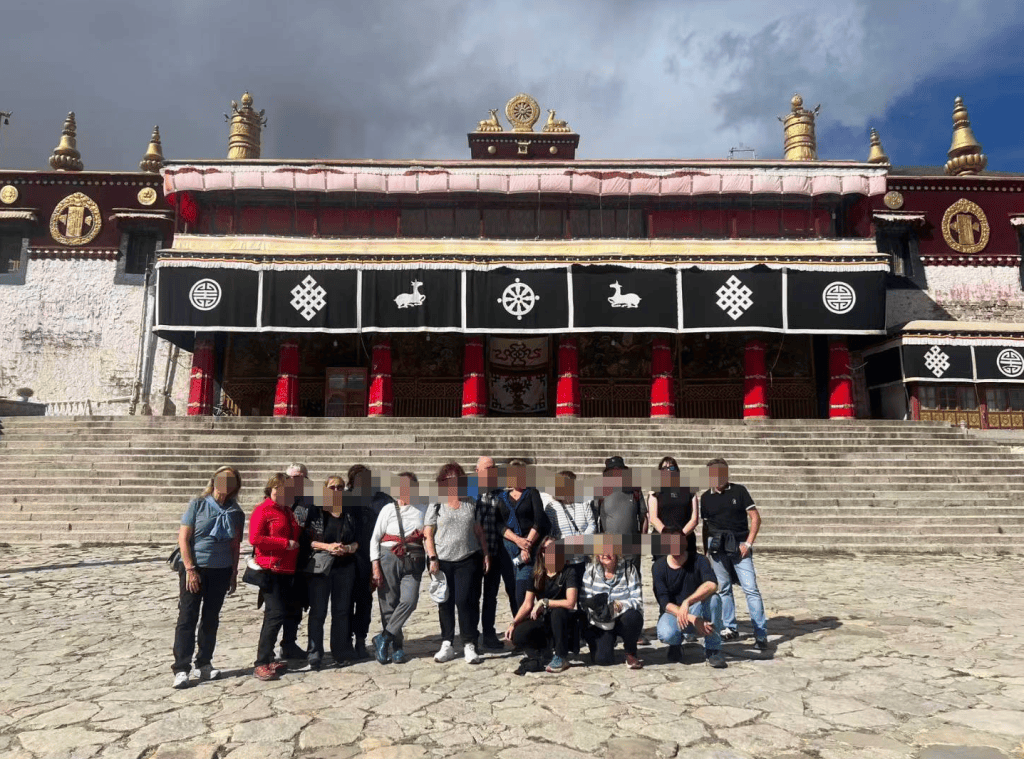
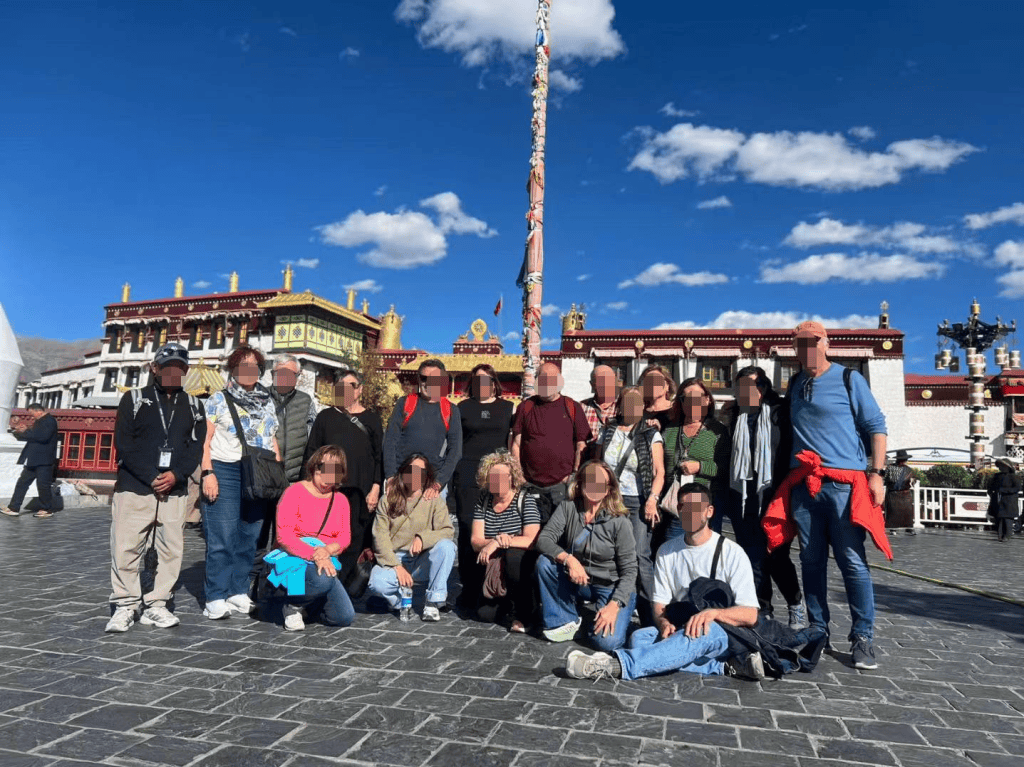
Later in the journey, the cultural stops carried more weight because the group had already felt the plateau physically. At the monastery stops, they listened longer, walked more slowly, and stood still in front of butter lamps and painted walls without needing to be prompted. That is one of the useful lessons of a multi-day Tibet route: once the body stops rushing, the mind becomes more available. The Spanish travelers did not treat these places as fast photo points. They watched, asked, and gave the sites time.
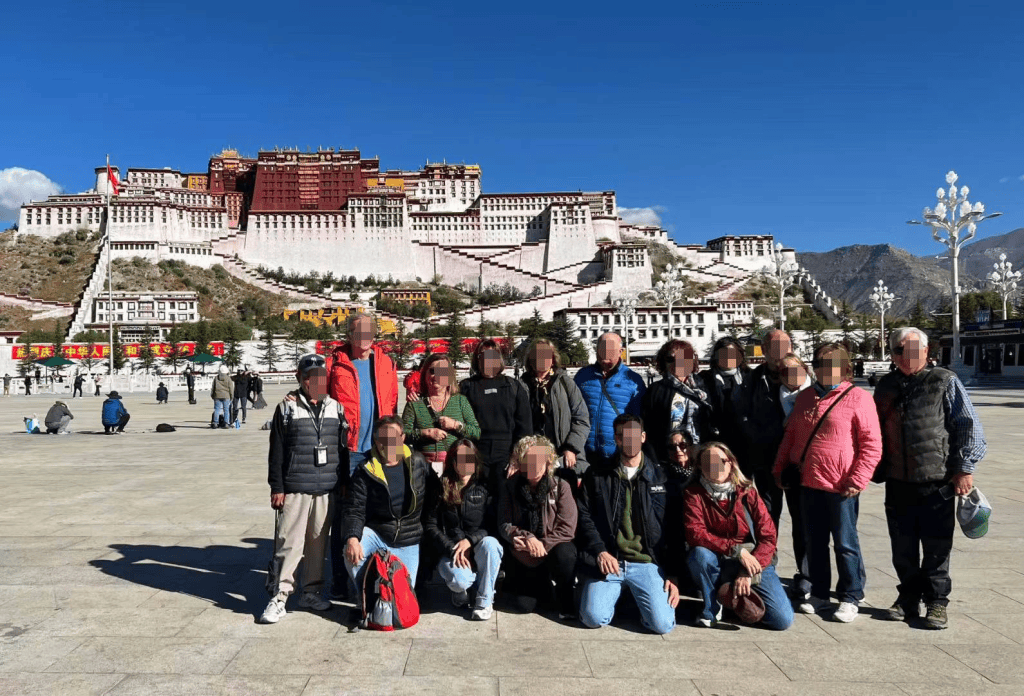
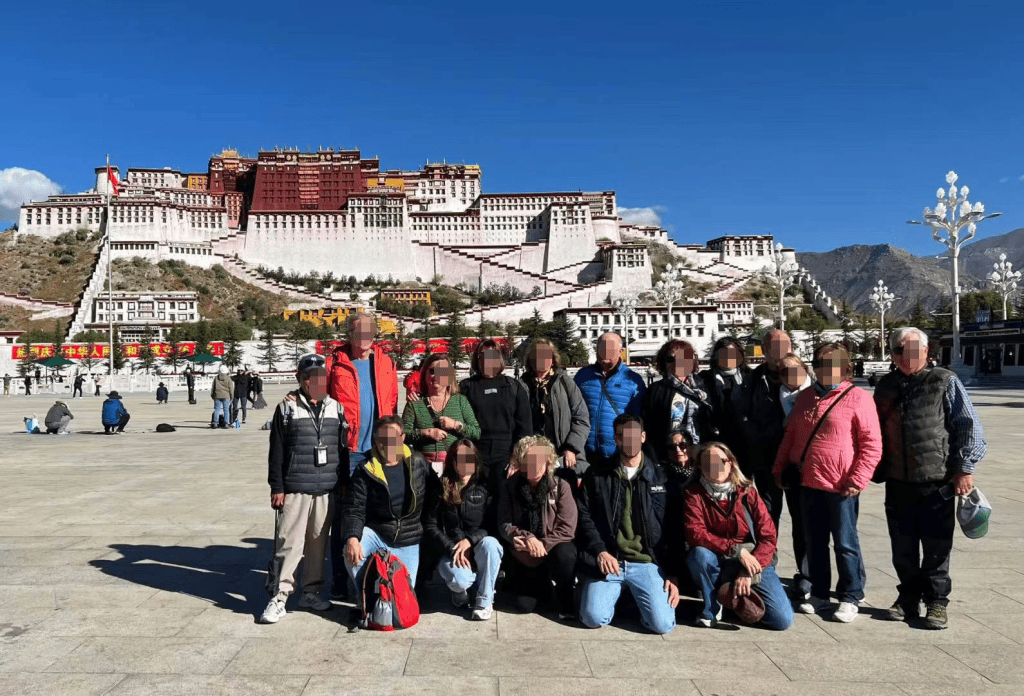
We also made sure the photo windows were right. Summer in Tibet can be bright enough to flatten color if you arrive too late, so we chose the cleaner light for group shots and kept the rest of the day open for quieter observations. The result was a sequence that felt lived rather than staged: road dust, monastery courtyards, long shadows, and the steady movement of a custom group that had learned how to travel on the plateau without fighting it.
Departure day, and the white khata
On the final day, the atmosphere changed in a way no itinerary line can fully describe. As we prepared to part ways, we presented each traveler with a white khata. The gesture was simple, but it carried the whole trip in it: respect, blessing, and the local wish that the road ahead remains open. When we said “Tashi Delek,” the group understood it immediately. They had come for Tibet’s landscapes and culture, and they were leaving with the memory of how Tibet receives guests.
For us, that closing moment mattered because it tied together everything the journey had required: permit preparation, patient pacing, checkpoint handling, and a group structure that stayed calm from arrival to farewell. The trip was never about racing through a list. It was about letting Spain meet Tibet at the right speed, in summer light, with enough care in the logistics that the human moments could actually stand out.
Verified Operation Record: Starbright Booking Ref STJ-2026-8448-SP.
Real Photos
Image Gallery
Traveler Quote
What This Journey Proved
"The group’s final khata farewell in Lhasa turned the journey into a shared memory rather than a checklist of sights."
Practical Travel Tips
Practical Travel Tips From This Journey
- June brings strong sunlight in Lhasa, so sunglasses, sunscreen, and a hat matter even on short walks.
- For a 17-person custom group, keep passports and day bags easy to reach for checkpoints and hotel check-ins.
- On the Lhasa-to-Shigatse corridor, expect a normal paperwork pause; a patient guide and a small snack keep the group comfortable.
- Drink water steadily and keep the first two days light so altitude rhythm stays stable.
- Use early or late light for photos, especially in summer when the plateau brightness is intense by midday.