
Verified Custom Tibet Story
A Family of 13, a Spring Window, and Snow on Everest
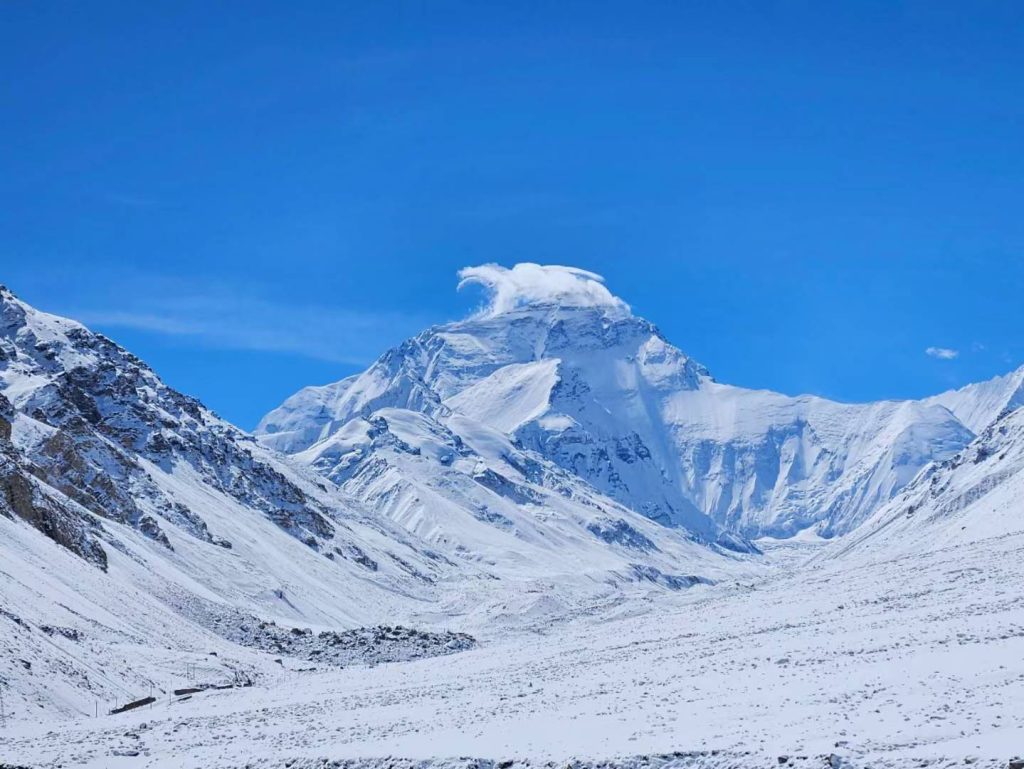
"A 13-member Australian family timed their first Tibet journey perfectly and witnessed a rare snow-covered Mount Everest after recent weather closures."
Traveler Profile
Traveler Profile
- Traveler
- Family Traveler from Australia
- Origin
- Australia
- Traveler Type
- Family
- Age Range
- 30s-60s
Trip Snapshot
Trip Snapshot
- Duration
- 15
- Season
- Spring
- Travel Style
- First Tibet Visit
- Tour Type
- Custom Journey
- Destinations
- Mount Everest, Potala Palace, Yamdrok Lake, Barkhor Street
Why Tibet
Why Tibet Became the Right Journey
For this Australian family, Tibet made sense as a first big multigenerational journey because they wanted more than a high-altitude road trip. With 13 travelers spanning their 30s to 60s, April gave them the right balance: cool, stable spring travel conditions, clearer mountain structure on the overland route, and enough time to pace the journey carefully from Lhasa toward Everest.
The route mattered. Potala Palace and Barkhor Street gave the family an immediate connection to Tibetan history and daily devotional life, while Yamdrok Lake and the long drive west built toward the real turning point of the trip: arriving after recent Everest weather disruption and finding the mountain transformed by fresh snow. That encounter with a white-draped Mount Everest became the moment the whole journey crystallized.
Travel Challenge & How We Helped
Travel Challenge & How We Helped
Travel Challenge
Before travel, the main pressure points were practical. A 13-person family group flying in from Australia needed tight permit timing, coordinated arrivals, and a route that would work for both younger adults and older family members over 50. Because this was their first Tibet visit, altitude pacing in Lhasa had to be handled carefully before moving toward the higher westbound road.
There was also route uncertainty around Everest. Recent mountain access disruption caused by weather made timing sensitive, so expectations had to stay realistic while still protecting the family’s chance of reaching the viewpoint in good conditions. For a group this size, vehicle comfort, luggage loading, meal timing, restroom planning, and flexible photo stops all mattered just as much as the sightseeing itself.
How We Helped
We built the journey as a fully paced 15-day custom route, starting with acclimation-friendly premium stays in Lhasa and private vehicle support sized for a 13-member family, with room for layered clothing, day bags, and efficient luggage handling. Our local coordination team arranged the Tibet Travel Permit in advance, synchronized the flight-entry process, and structured each major transfer with realistic drive windows rather than rushed sightseeing.
On the ground, our guide team managed gradual altitude gain, daily hydration reminders, slower walking intervals at major monuments, and oxygen-ready support throughout the overland section. For the elders in the family, we kept boarding, stop frequency, and monastery visits practical and unhurried. When spring weather shifted, we adjusted around it in real time, including shelter and pacing in Lhasa during an afternoon storm and careful onward timing for the Everest section. This is the same planning logic we use for our tailor-made Tibet journeys: permit accuracy, road realism, and flexible local execution.
Journey Experience
Journey ExperienceEdited Debrief from the Road
After the family returned from the plateau section, we sat down with our lead guide, Tenzin, to review the journey properly. Fifteen days in Tibet with 13 family members is never just about landmarks. It becomes a matter of rhythm: how quickly people settle into Lhasa, how elders handle the first staircases, when to stop for tea instead of pushing on, and how to hold everyone together all the way from the city’s sacred circuits to the long western road toward Mount Everest.
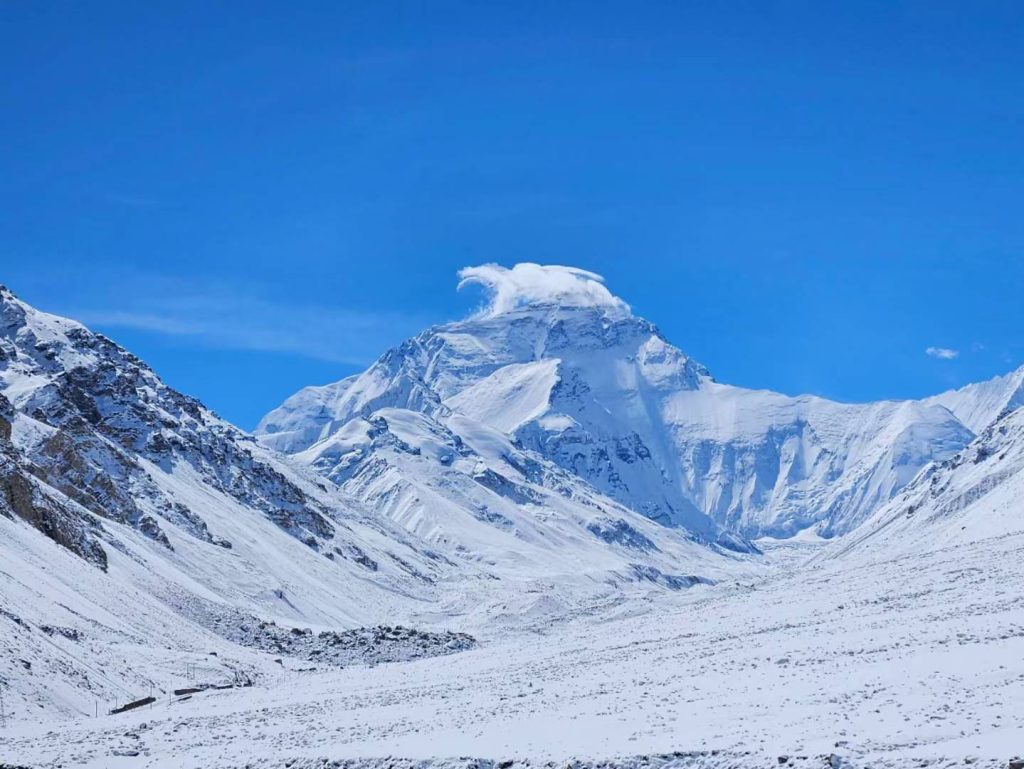
What stayed with all of us was the timing. Not long before their arrival, Everest access had been affected by weather. Then this family came through in April and met the mountain under fresh snow, in that short spring interval when the high plateau can still turn white and the sky can clear with extraordinary sharpness.
At Potala Palace, the Family Found Its Pace
We asked Tenzin: When did you feel the group had really arrived in Tibet?
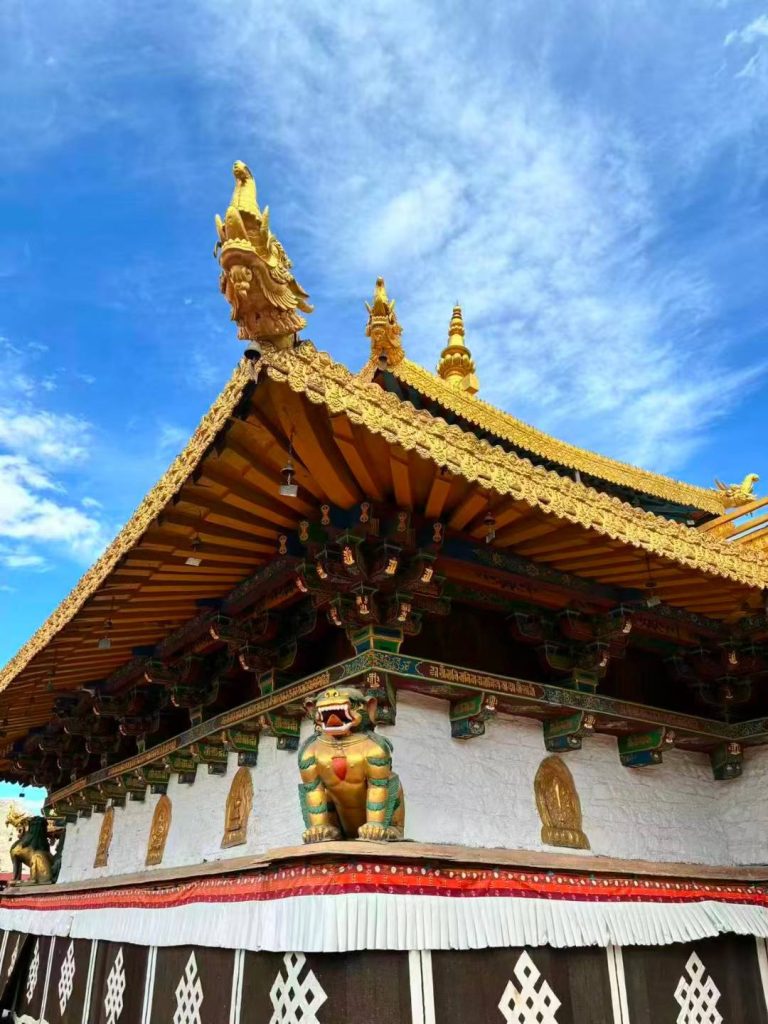
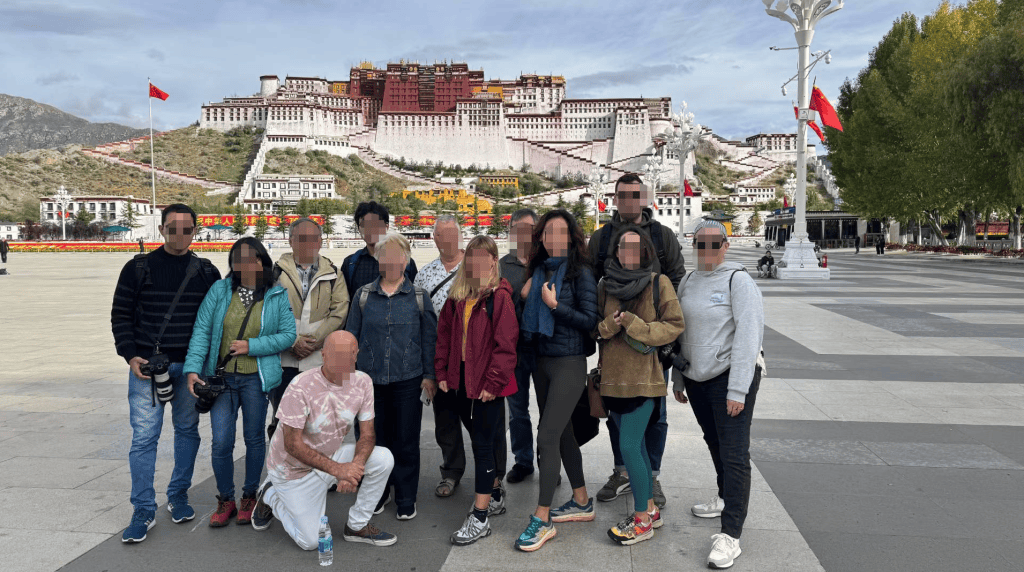
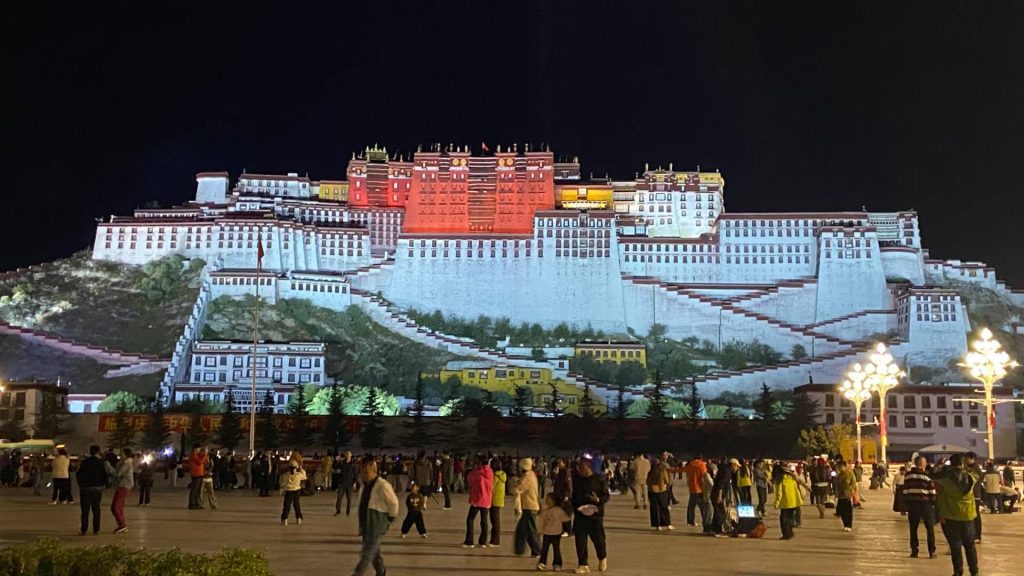
Tenzin: Not at the airport. Not even at hotel check-in. It was at Potala Palace. You can see it immediately with a family group. The first climb tells you everything about pace, breathing, and confidence. We kept the morning gentle and entered with enough time so nobody felt hurried on the steps. The older family members did especially well because we had already built in a soft landing in Lhasa with light walking, warm meals, and an early rest pattern.
We asked: What was the atmosphere like that day?
Tenzin: Classic spring Lhasa. Clear light, cool air, and that bright Tibetan sky that makes the white walls and red palace body look even sharper. Inside, the family slowed naturally. They noticed the yak butter lamps, the dark polished passageways, and the way sound changes once you leave the open courtyard and enter the chapel spaces. Nobody rushed their phones out at every turn. They were looking carefully.
Later, we continued toward Barkhor Street, where the experience became less monumental and more human. Pilgrims turned prayer wheels along the kora, juniper smoke drifted near the temple quarter, and the family began to understand that Lhasa is not only a place to visit but a city still moving on devotional time.
We asked: Was there any moment that changed the day unexpectedly?
Tenzin: Yes, the afternoon storm. It came quickly, the way spring weather sometimes does in Lhasa. Thunder built over the city, and we moved everyone into a local sweet tea house for about forty minutes. For a large family, that could have become a disruption. Instead, it became one of the best pauses of the trip. A few local pilgrims at the next table began chatting with us, asking where the family had come from and how they were feeling at altitude. We translated back and forth over cups of sweet tea while rain hit the street outside. That kind of stop cannot be scheduled, but it often gives people their clearest memory of Lhasa.
Yamdrok Lake Was the Day the Road Opened Up
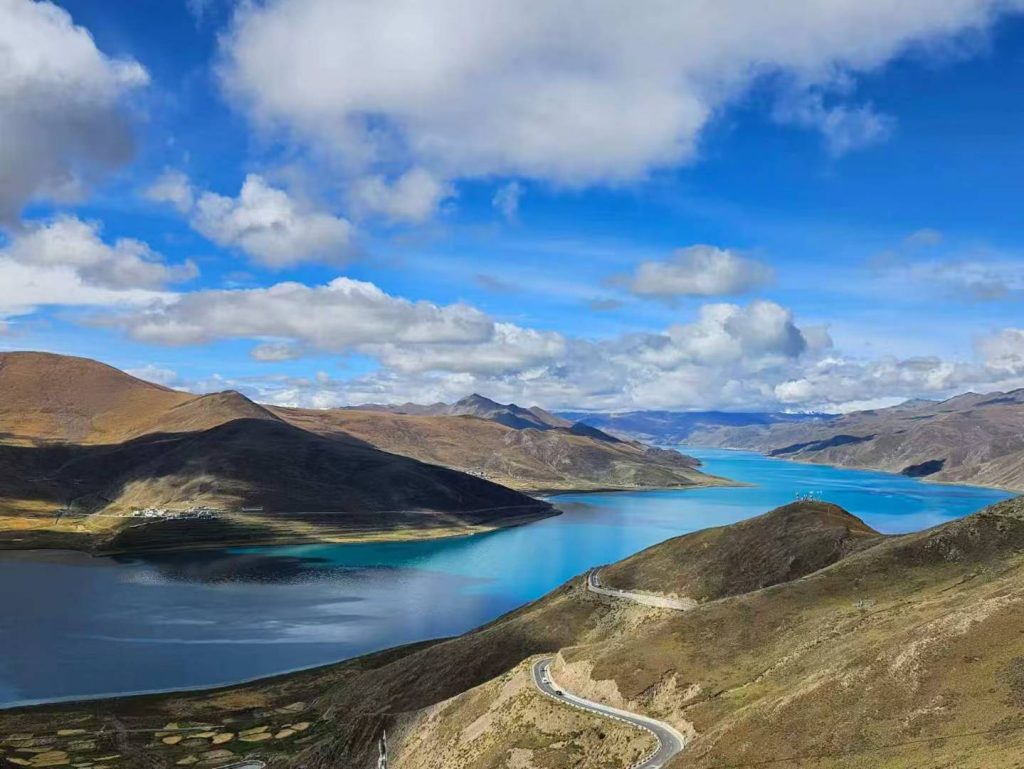
By the time we left Lhasa for the westbound drive, the family had settled into the altitude well enough to enjoy the route rather than simply endure it. This is where group handling matters most. We staggered boarding carefully, kept hand luggage accessible, and used deliberate photo and restroom timing so the older travelers never felt dragged along by the faster walkers.
We asked Tenzin: Why was the Yamdrok section important for this family?
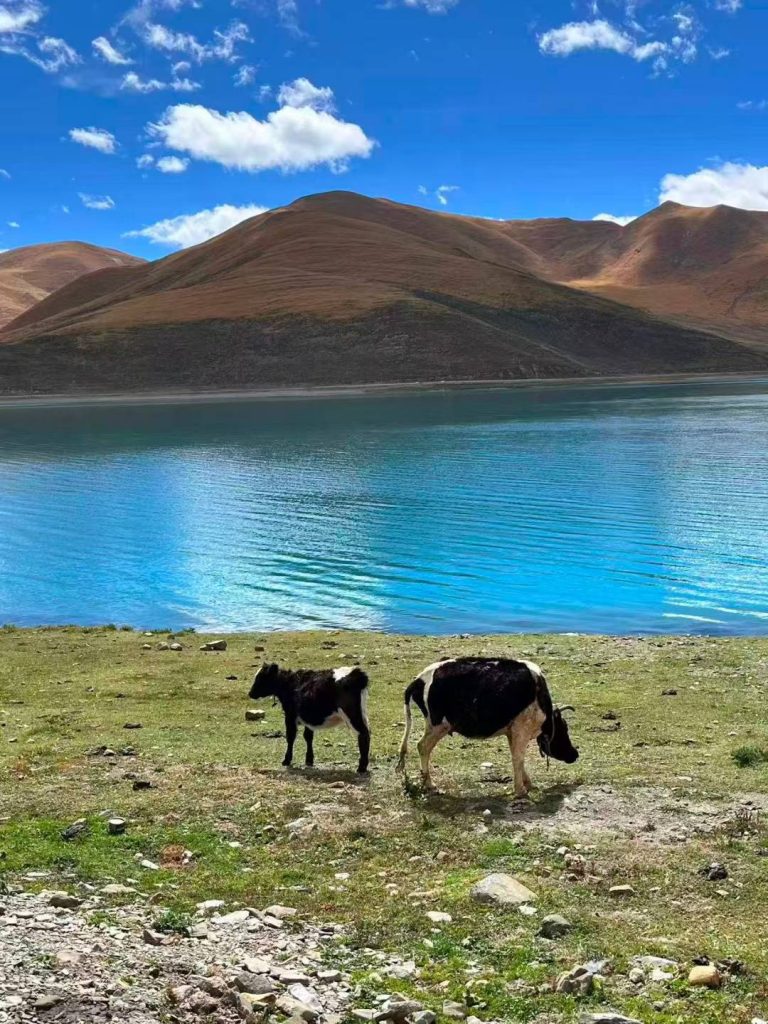
Tenzin: Because this is when Tibet becomes vast. In Lhasa, people are still orienting themselves. At Yamdrok Lake, they finally see how the landscape keeps changing. At the high viewpoint, prayer flags snapped in the wind and the lake shifted from blue to turquoise under the spring sun. The family spread out quietly for a while. Some wanted wide photos; others simply stood still. For a group of 13, that silence was striking.
We asked: Did spring affect the route visually?
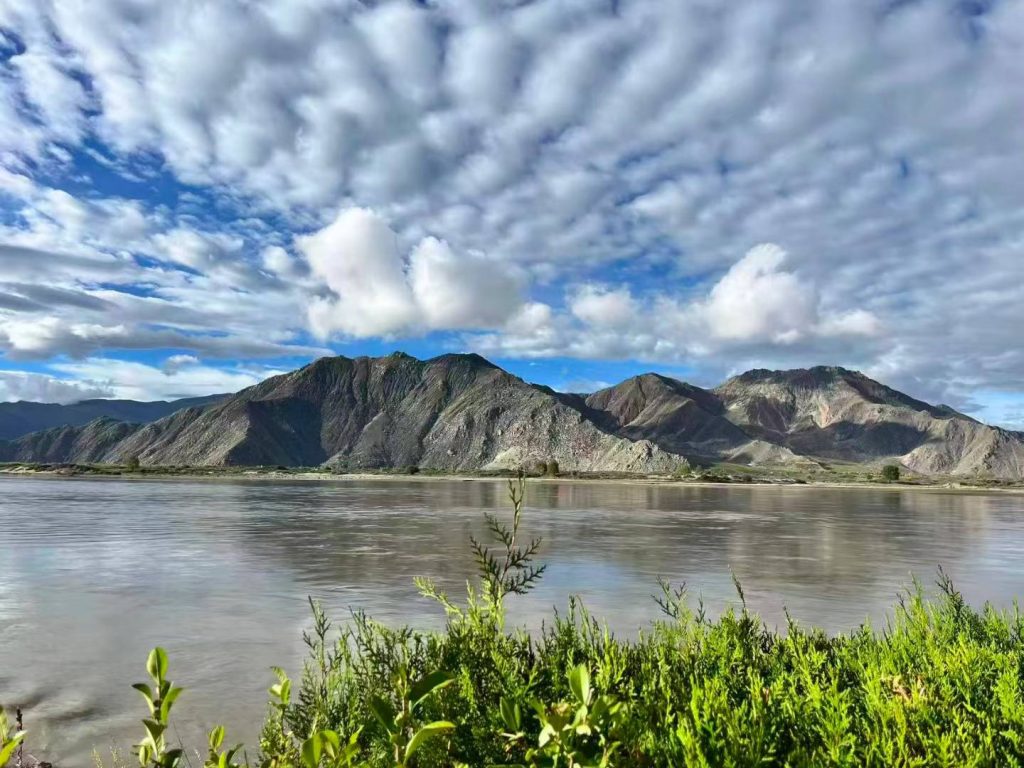
Tenzin: Definitely. April gives you a leaner, cleaner mountain look. The air can feel crisp, the ridgelines stay well defined, and the long road toward Gyantse and Shigatse carries that highland openness without the heavier summer haze. It suited first-time visitors because every major view read clearly.
From there, the journey kept building westward in the right order: longer drives, more mountain structure, colder air in the late day, and a growing sense that Everest was no longer an idea on the itinerary but a real weather decision waiting ahead.
Then Everest Appeared in White
We asked Tenzin: After the earlier weather issues around Everest, what was the mood as you approached?
Tenzin: Measured. We never oversell a mountain day. We briefed the family on road conditions, wind exposure, and the need to move steadily rather than overexert at high altitude. We also kept oxygen support ready in the vehicle and made sure everyone had their heavier layers close at hand. But as we got closer, the sky opened properly.
We asked: And the first view?
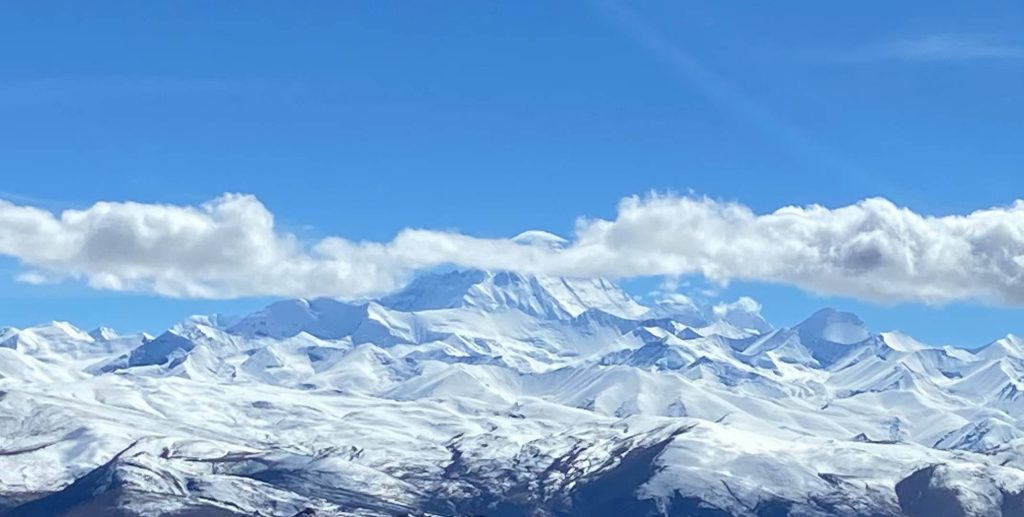
Tenzin: That was the turning point of the whole journey. Mount Everest was snow-covered, bright and full, with fresh white across the surrounding slopes. The family had come just after a difficult weather period, and instead of a blocked view they found the mountain looking almost ceremonial. One of our team said it looked like Everest had been draped in a white gown, and honestly that was the right description. The mountain had that kind of clean, sculpted presence.
The reaction was not loud. It was more absorbing than that. People stood longer than usual in the cold. They adjusted gloves, took photos, stepped back, and looked again. For a multigenerational family, this was the rare moment when everyone was focused on exactly the same thing.
Verified Operation Record
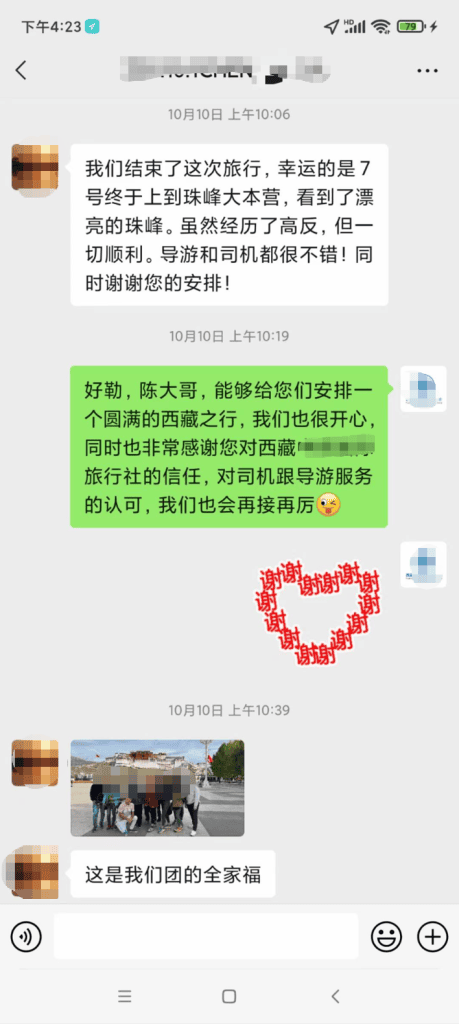
This journey is supported by our verified internal booking record under Starbright Booking Ref: STJ-2026-3134-AU, along with on-route photo evidence from Lhasa and the Everest sector. For travelers comparing routes, our Tibet Travel Permit guide and wider Tibet travel stories show how we pace first-time journeys with real local coordination.
When we finished the debrief, Tenzin’s summary was simple: the family did not just see Tibet’s headline places. They met Tibet in the right order. First, the city taught them how to move. Then the lake widened their sense of the plateau. Finally, Everest gave them the one thing nobody can manufacture in advance: a precise mountain moment, arriving exactly when the weather chose to allow it.
Real Photos
Image Gallery
Traveler Quote
What This Journey Proved
"A 13-member Australian family timed their first Tibet journey perfectly and witnessed a rare snow-covered Mount Everest after recent weather closures."
Practical Travel Tips
Practical Travel Tips From This Journey
- For an April Tibet journey that reaches Mount Everest, pack layers for both sunny daytime driving and sharply colder wind at the higher viewpoints. Gloves, sunglasses, and lip protection are especially useful.
- Large family groups should keep one small day bag inside the vehicle with water, snacks, medicine, and a warmer jacket so longer westbound drives stay comfortable without repeated luggage unpacking.
- On a first Tibet visit, use the first Lhasa days to walk slowly at Potala Palace and Barkhor Street before pushing farther west. That pacing helps older travelers adjust more comfortably.
- Spring weather can change quickly in Lhasa, so a light waterproof layer is worth carrying even on clear mornings. Short weather pauses often pass quickly and are easy to manage with a flexible guide.
- For routes that include Everest, start permit preparation early and keep the itinerary flexible enough for road and mountain weather windows. You can review basics in the permit guide and health considerations from the CDC high-altitude travel guidance.