
Verified Custom Tibet Story
A Summer Family Journey Across Tibet’s High Roads
"This 9-day June journey stood out for its smooth family logistics, thoughtful altitude pacing, and the group’s strong praise for driver Xiao Peng’s steady care on the road."
Traveler Profile
Traveler Profile
- Traveler
- Family Traveler from United States
- Origin
- United States
- Traveler Type
- Family
Trip Snapshot
Trip Snapshot
- Duration
- 9
- Season
- Summer
- Travel Style
- First Tibet Visit
- Tour Type
- Custom Journey
Why Tibet
Why Tibet Became the Right Journey
For this American family, Tibet made sense as a first high-altitude journey precisely because it could hold different generations in the same trip. With travelers over 60 in the group, they were not looking for a rushed checklist. They wanted a route with real plateau scenery, cultural depth, and enough pacing to let everyone enjoy the journey together.
June was a strong match. Summer brings warm Lhasa days, long light in the evenings, bright green valley stretches, and dramatic snow peaks still standing clearly above the lakes. That contrast between city pilgrimage routes and the open road is what gave this family trip its shape. The turning point came once the first altitude nerves settled in Lhasa and the group realized they could truly enjoy the road ahead rather than simply manage it.
Travel Challenge & How We Helped
Travel Challenge & How We Helped
Travel Challenge
Before departure, the main concerns were practical and familiar for a first Tibet visit: how to pace a family group of eight at altitude, how to keep older travelers comfortable, how to handle Tibet permits and flight-entry timing cleanly, and how to build a route that felt full without becoming exhausting.
June also requires disciplined planning. Popular summer dates tighten Potala Palace and major route scheduling, sunlight is strong, and long overland days need realistic meal breaks, restroom timing, and steady driving. For a multigenerational family, the real question was not simply where to go, but how to move through Tibet at a pace that kept the trip enjoyable from start to finish.
How We Helped
We designed the journey around gradual altitude adaptation and stable family logistics. Our local coordination team arranged the Tibet permits in advance, matched the group with acclimation-friendly premium hotels in Lhasa, and planned a private vehicle setup with luggage handled separately and oxygen-ready support onboard for the higher sections.
On arrival, we kept the first evening light and practical. After one guest felt the room air was too dry for comfortable breathing, we adjusted the humidification setup right away and briefed the family on hydration and rest before sightseeing began. For the road section, we paired the family with driver Xiao Peng, whose smooth driving and careful attention during higher stretches became one of the strongest parts of the trip. The route pacing, meal coordination, and photo-stop rhythm were all built to suit a first-time family journey rather than a hard-driving expedition. Travelers planning something similar often start with our tailor-made Tibet tours and our Tibet Travel Permit guide.
Journey Experience
Journey ExperienceThree Ways This Family Saw Tibet
When we look back at this June journey, we do not remember it as a line of hotel check-ins and highway distances. We remember it in contrasts: the careful quiet of the first night in Lhasa, the layered rhythm of pilgrimage streets, the long summer road where conversation and scenery kept changing, and the way a family of eight slowly settled into the altitude together. That is how this trip felt on the ground from our side as the local operations team.
Lhasa Began with Breathing Space, Not Hurry
The family arrived by flight from the United States with the usual first-day mix of excitement and caution that we often see on a first Tibet visit, especially when there are older travelers in the group. In June, Lhasa can feel bright immediately: strong UV, crisp light on the city slopes, and a long evening that stretches well past what many guests expect. That first afternoon, we kept movement minimal, coordinated luggage directly to their premium hotel, and helped everyone settle before any formal sightseeing began.
The only small friction point came on Night 1, exactly the kind of detail that matters more than people expect at altitude. One room felt too dry for comfortable breathing. We adjusted the humidification setup promptly, checked airflow, and reminded the family to keep the evening easy, drink water steadily, and resist the urge to unpack the whole trip at once. By the next morning, the group was more relaxed, and that mattered. Tibet often opens best when the first success is simple: a good night, normal breathing, and confidence for the next day.
Once they stepped into the city properly, Lhasa gave them a softer start than many first-time travelers imagine. Around Jokhang Temple, the scent of juniper incense drifted through the square while pilgrims moved steadily along the Barkhor Street kora, prayer wheels turning in an unbroken metallic rhythm. Inside the old sacred spaces, yak butter lamps flickered against dark walls, and the pace of the visit naturally slowed the family down. That was useful. In altitude travel, reverence and acclimatization often support each other better than speed ever can.
The City Had Its Own Soundtrack
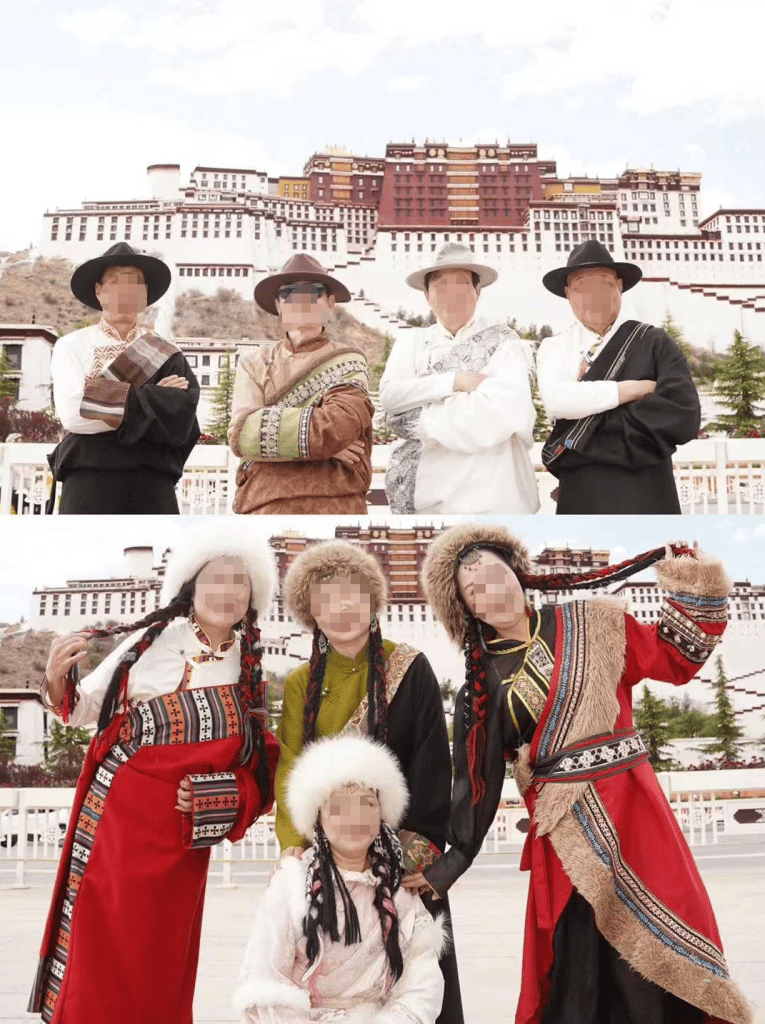
By the time we brought them to the Potala Palace, the group was ready for a more physical day, but still with discipline. The palace steps always reveal who has adjusted well and who still needs a gentler tempo. In this family, that turned into a quiet strength. They climbed in smaller natural clusters, never competing, pausing where needed, taking in the broad summer view of Lhasa instead of rushing for a finish line. From our coordination side, this is exactly the right pattern for a multigenerational Tibet trip.
Later, the atmosphere shifted again at Sera Monastery. The debate courtyard brought back energy after the measured pace of the palace. Monk hand-claps cracked through the air; robes moved in quick circles; visitors instinctively leaned in, then stepped back to keep the space open. For a family group, that contrast often becomes one of the most memorable urban moments in Lhasa: one part meditative, one part alive with public intellect and ritual movement. It is not staged for visitors, and that is why it stays with people.
What we noticed most was that the family never treated Lhasa as a stopover before bigger scenery. They let the city do its work first. That choice strengthened the rest of the route more than any altitude number on a device ever could.
Then the Plateau Road Took Over
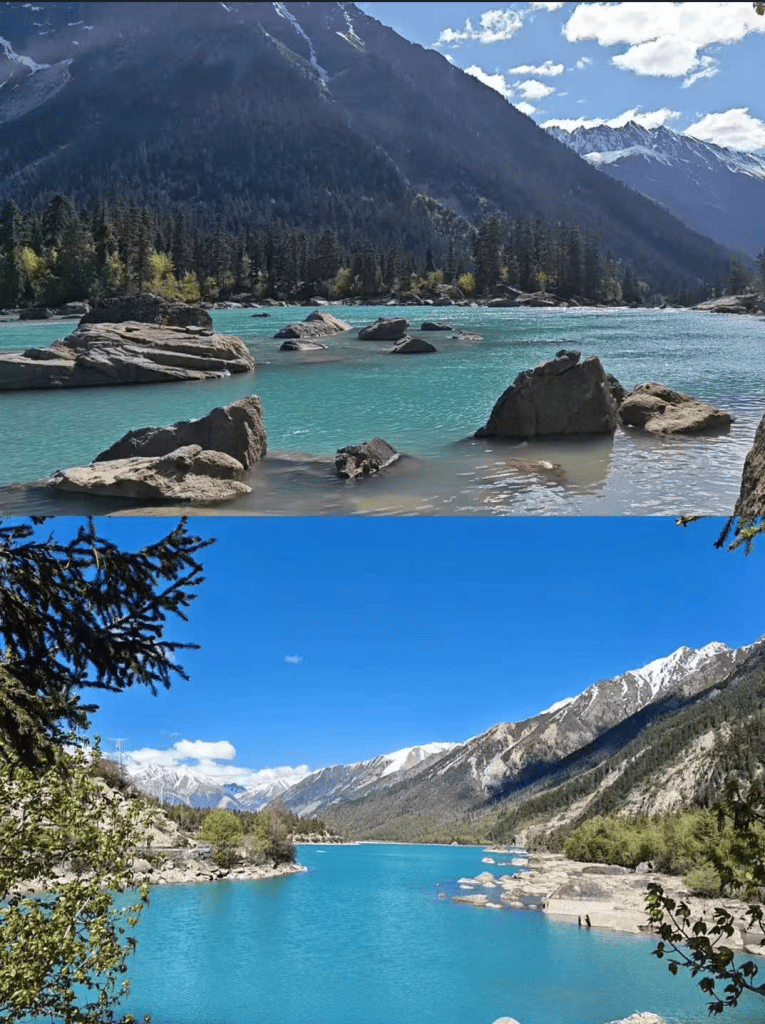
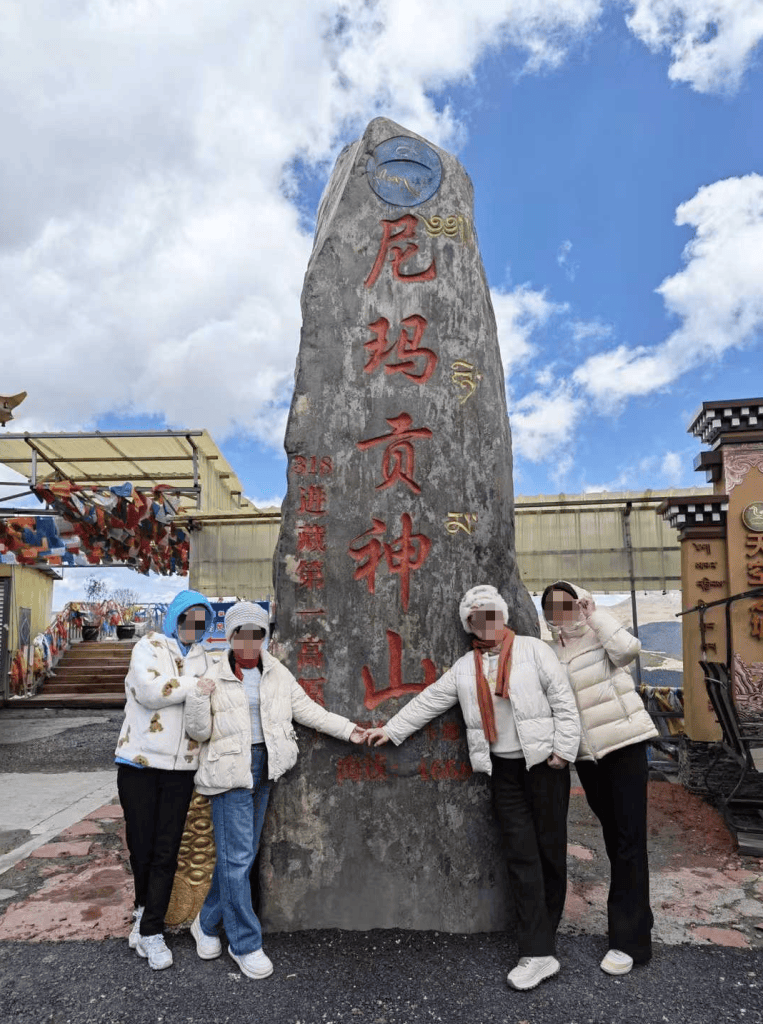
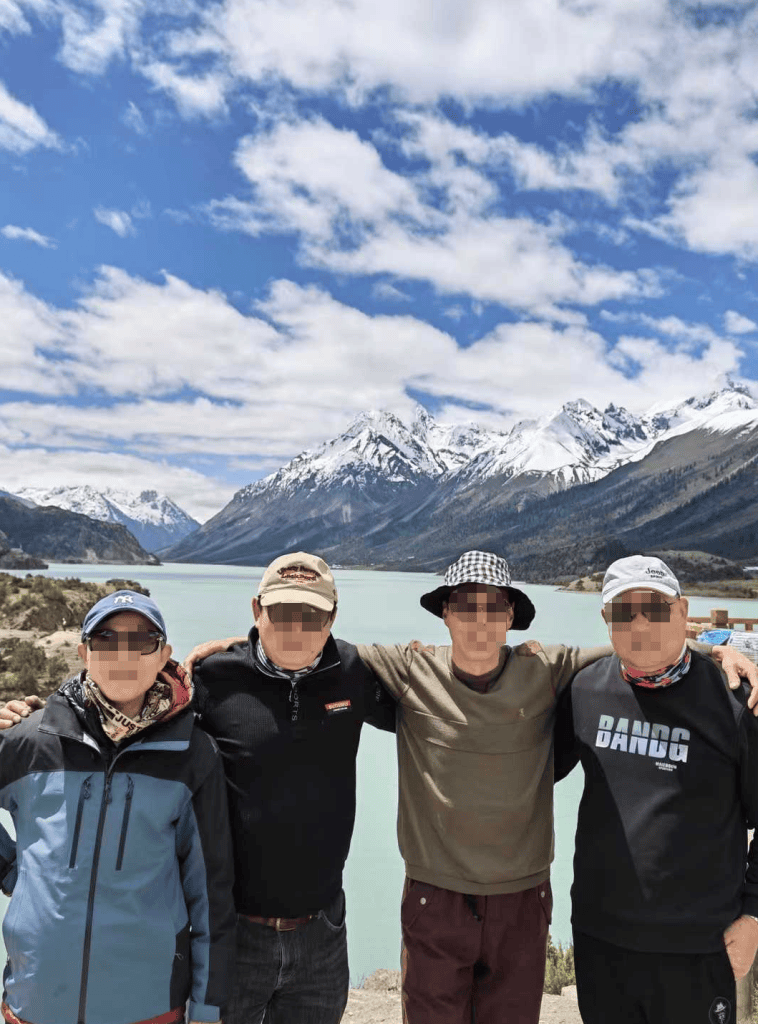
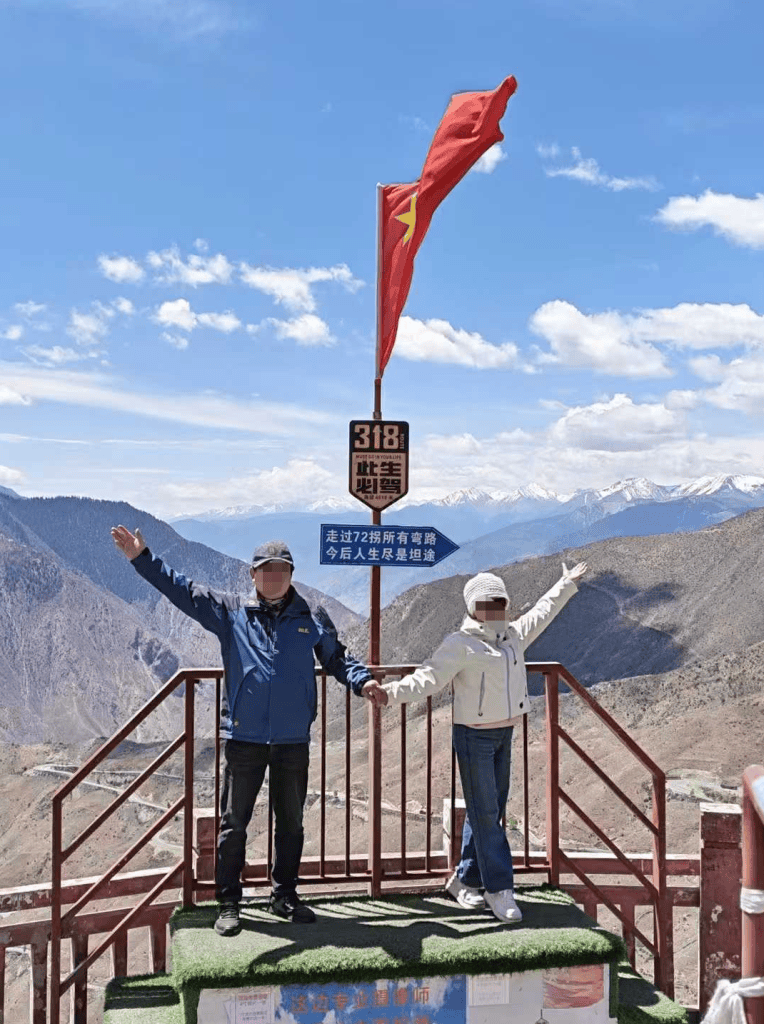
Once the road section began, the trip changed scale completely. Summer in Tibet does that in a single morning. You leave the denser cultural layers of Lhasa and the land opens into long valley light, bigger skies, roadside herds, and high passes where everyone gets out quietly for a moment before the cameras come out. The family’s photos tell this story clearly: bright alpine water, snow-covered ridgelines, broad mountain walls, and the kind of road-stop laughter that only appears after a group has fully settled into the journey.
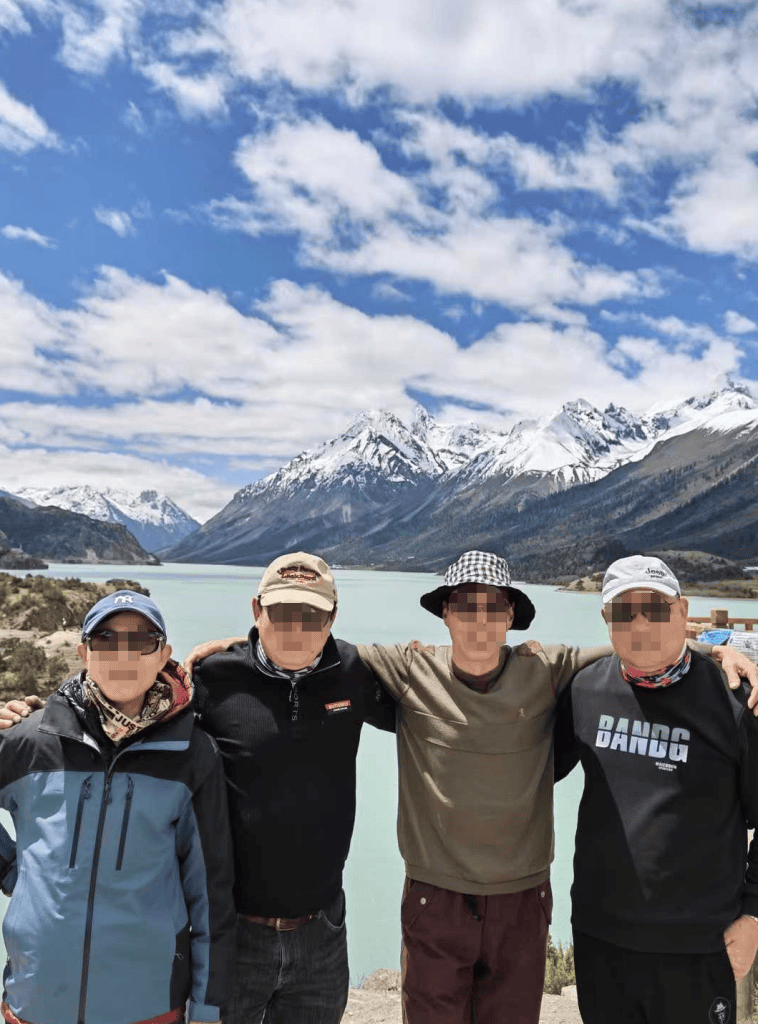
One of the strongest visual moments came beside a pale turquoise lake backed by sharp snow peaks, where four of the travelers stood shoulder to shoulder with the easy body language of people who had stopped thinking about the altitude every minute. That matters. Earlier in the trip, our job was to keep the days measured. Here, the road itself started rewarding that patience. The plateau was no longer something to manage; it had become something to enjoy.
On longer driving days, Xiao Peng became central to the trip’s success. The family later praised him repeatedly, and we understood why. On a route like this, smooth driving is not a small detail. It shapes appetite, rest, confidence, and how older guests feel when the highway rises and curves through the plateau. He kept the road rhythm calm, helped us time sensible breaks, and paid close attention whenever anyone felt the normal heaviness that can come with higher elevation. That steadiness is one reason the journey felt expansive rather than tiring.
The road scenes in June were especially generous: green summer stretches below the higher ridges, sharp sunlight across open grassland, and clouds building dramatic textures above the mountains without fully closing the sky. With late sunsets near 9:00 PM, the group never felt rushed out of the day. Even simple roadside pauses carried a sense of extra time.
The Family Photo That Explained the Whole Trip
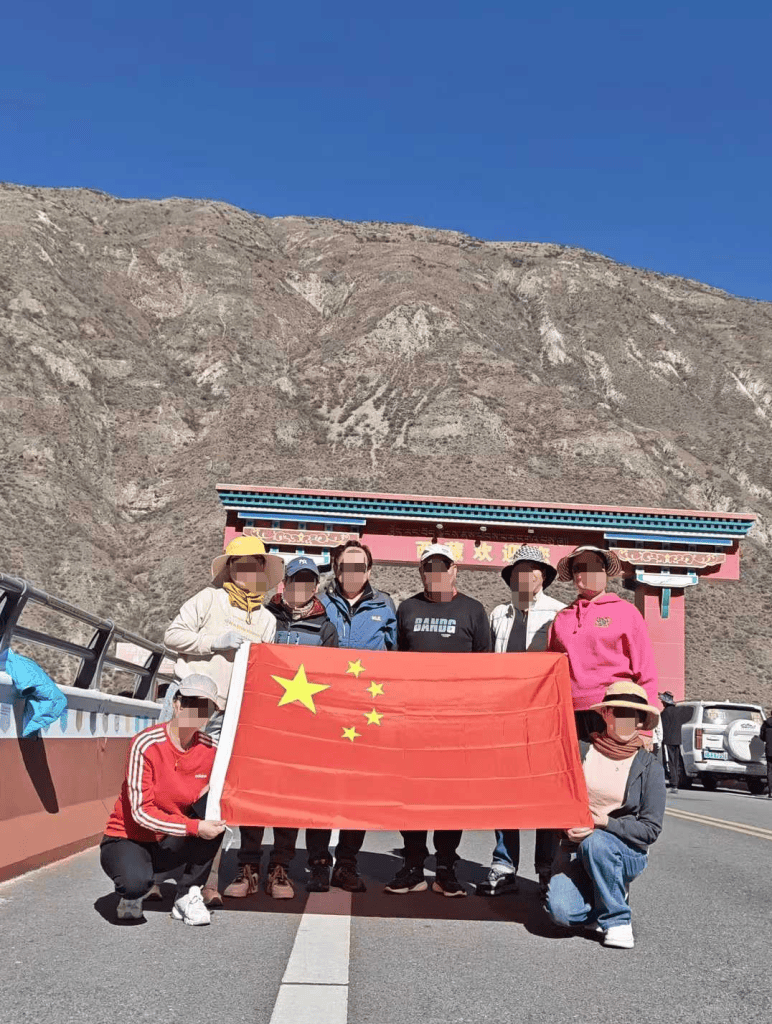
One group image stands out to us more than any formal landmark shot. The full family gathered on the road with a mountain backdrop, close together, relaxed, unforced. It says something important about custom Tibet travel: the real success is not only which famous places appear in the itinerary. It is whether eight people, including older family members, can move through high-altitude country and still look comfortable being together by the end of it.
That was the quiet achievement of this journey. The family had planned the trip for a long time, and by June the result was not merely scenic proof from Tibet. It was nine days in which permits, pacing, hotel setup, vehicle support, and high-road judgment all disappeared into the background enough for laughter to take over the foreground. From our side, that is the kind of trip we want to run: precise behind the scenes, easy in memory.
Verified Operation Record
Verified by Starbright internal coordination archive and trip media under Booking Ref STJ-2026-7036-UN. This record corresponds to a June 2026 custom family journey for eight travelers entering Tibet by flight, with on-route photo evidence and driver-service feedback documented by our local operations team.
Real Photos
Image Gallery

Traveler Quote
What This Journey Proved
"This 9-day June journey stood out for its smooth family logistics, thoughtful altitude pacing, and the group’s strong praise for driver Xiao Peng’s steady care on the road."
Practical Travel Tips
Practical Travel Tips From This Journey
- For a June Tibet journey, plan the first 24 hours in Lhasa lightly. Hydration, slower walking, and an early night help more than trying to see too much on arrival day.
- Summer sunlight on the plateau is intense even when the air feels mild. Bring a brimmed hat, sunglasses, lip protection, and light layers that can handle warm afternoons and cooler high-pass stops.
- For family groups with older travelers, private vehicle pacing matters. Build in regular restroom and tea breaks on long road days rather than pushing straight through for distance.
- Keep hotel room air comfortable on the first night. A simple humidification adjustment can make breathing feel easier after flying into Lhasa.
- Permits and summer scheduling should be handled early, especially for first-time travelers entering by flight and aiming for major sights or overland road sections.