
Verified Custom Tibet Story
Twelve Summer Days in Tibet with Three Sisters from Austria
"A carefully paced 12-day first Tibet visit helped three Austrian sisters move from early altitude strain to a warm, culture-rich journey across Lhasa and the plateau."
Traveler Profile
Traveler Profile
- Traveler
- Hein
- Origin
- Austria
- Traveler Type
- Family
Trip Snapshot
Trip Snapshot
- Duration
- 12
- Season
- Summer
- Travel Style
- First Tibet Visit
- Tour Type
- Custom Journey
Why Tibet
Why Tibet Became the Right Journey
For these three sisters from Austria, Tibet carried two clear meanings in one journey. They wanted to stand inside the landscapes that had long drawn them in from afar, but they were equally intent on understanding Tibetan history and Tibetan Buddhism in a serious way. That is why their route worked so well as a first Tibet visit in July: time in Lhasa for acclimatization, major monastic sites such as Sera Monastery and Jokhang Temple, and then wider plateau scenery where sacred lakes and snow ranges could be felt in full scale.
Summer gave them long daylight, warm Lhasa afternoons, and bright highland color, but it also demanded patience. Their turning point came when the first physical challenge of altitude forced them to slow down. Once they accepted Tibet at Tibet's pace, the journey opened properly: debate courtyards, pilgrims on the Barkhor Kora, murals and thangka imagery, and the changing blue of the holy lake became part of one connected experience rather than separate sightseeing stops.
Travel Challenge & How We Helped
Travel Challenge & How We Helped
Travel Challenge
Before the trip, the main concerns were practical and familiar for first-time Tibet travelers arriving by flight from Austria: how to handle Tibet Travel Permit timing, how to build a route that would not push altitude too fast, and how to keep three travelers moving comfortably through a full 12-day program in July. The group also needed a realistic plan for long road days, regular rest stops, and enough flexibility in the first days in Lhasa to respond to breathing comfort and headaches without losing the shape of the trip.
Because July is a busy summer period in Tibet, entry coordination, landmark ticket timing, and crowd management around the Potala Palace and Jokhang Temple also had to be settled well in advance. For a small private family-style group, the challenge is rarely transport alone; it is getting the pace right so the experience feels steady, safe, and meaningful from arrival onward.
How We Helped
We arranged this as a private custom journey for three guests, with early permit handling, flight-arrival coordination, and a handpicked acclimatization-friendly hotel setup in Lhasa. On arrival, our local team and Guide Dawa kept the first evening intentionally light, checked room comfort, and adjusted the humidification setup so breathing felt easier during the first night at altitude. We also kept oxygen-ready support with the vehicle and monitored their rhythm closely in the opening days.
Operationally, we paced the journey in the way we usually recommend for a first Tibet visit: slower cultural days first, then longer scenic drives once their bodies had adjusted better. Private vehicle logistics, luggage handling, meal timing, and sightseeing windows were all set around summer conditions, with earlier starts for the major monuments, measured walking speeds at high sites, and regular stops on plateau driving days. Dawa's role was central throughout: permit checks, altitude reminders, historical interpretation, and steady day-to-day care for all three sisters.
Journey Experience
Journey ExperienceField Log from a July Journey
We still remember this July trip clearly because it unfolded the way many meaningful first Tibet journeys do: not as a rush through famous places, but as a gradual adjustment between body, road, light, and understanding. The three sisters from Austria arrived by flight into Lhasa for a 12-day custom journey, and from the first airport pickup our local coordination team kept the program deliberately measured. Dawa met them on arrival, handled the hotel check-in smoothly, and reminded everyone that the first victory in Tibet is never distance. It is rhythm.
That first evening in Lhasa, after luggage was settled and the city’s warm summer light was still lingering well past dinner, one small practical issue came up in the rooms. The dry high-altitude air felt uncomfortable for normal breathing after the flight. Dawa and our hotel coordination desk adjusted the humidification setup that night, and the difference was immediate enough to make the first sleep easier. It was a minor detail, but these details matter in Lhasa, especially on Night 1.
Day 2-3 | Lhasa at walking pace: Jokhang Temple, Barkhor Street, and Sera Monastery
We kept the opening sightseeing window compact. In July, Lhasa mornings are cleaner for movement, with stronger UV building toward midday, so Dawa took them first into the old city rather than pushing a full schedule. Outside Jokhang Temple, juniper incense drifted through the square while pilgrims moved steadily toward the entrance. Along the Barkhor Kora, prayer wheels turned in unbroken rhythm and the sisters slowed naturally into that same circle, watching prostrating pilgrims and pausing often rather than trying to outwalk the altitude.
Inside the temple precinct, the journey began to shift from physical challenge to concentration. Yak butter lamps, dark timber, low chanting, and the density of devotion inside Jokhang Temple gave the sisters the historical and religious context they had been seeking long before the trip. What they had read about Tibetan Buddhism in Europe became much more immediate in those temple rooms and on those narrow streets.
By the time we brought them to Sera Monastery, they were moving more confidently, though still carefully. Dawa timed the visit for the monks’ debate session, where the sharp hand-claps in the courtyard broke the stillness in a way that always surprises first-time visitors. He explained the logic behind the gestures and verbal exchange in plain, direct language, and that clarity mattered. This was not sightseeing reduced to photographs; it was a day of entering Tibetan religious culture through sound, movement, and disciplined attention.
Day 4 | The Potala Palace steps and the long summer evening
The Potala Palace always requires honest pacing, and on this journey we treated it exactly that way. We scheduled the climb with enough buffer before and after, kept the morning controlled, and used a private vehicle drop-off to minimize unnecessary walking before the ascent. Even for strong travelers, those steps force a slower cadence. For this group, who had already felt the effects of altitude in the first days, the Potala became less a monument to conquer and more a place to enter breath by breath.
That was one of the emotional pivots of the trip. Instead of resisting the slowness, the sisters leaned into it. From the upper levels, Dawa spoke about the palace’s layered role in Tibetan political and religious history, and the conversation landed differently because the body had already been humbled a little. By late afternoon, Lhasa still held that expansive July brightness, with sunset coming late. The city below looked wide and sun-washed, and the day ended not with exhaustion alone but with a sense of having earned access to one of Tibet’s defining spaces.
Day 6-8 | The holy lake road: high passes, weather luck, and open country
Once the acclimatization phase had stabilized, we moved them out onto the plateau roads for the scenic section of the journey. Summer driving in Tibet always asks for flexibility: strong sun, occasional cloud build-up, and changing visibility across each pass. We set early departures, kept snacks and water easy to reach in the vehicle, and used regular stop points so the long road never became a single tiring block.
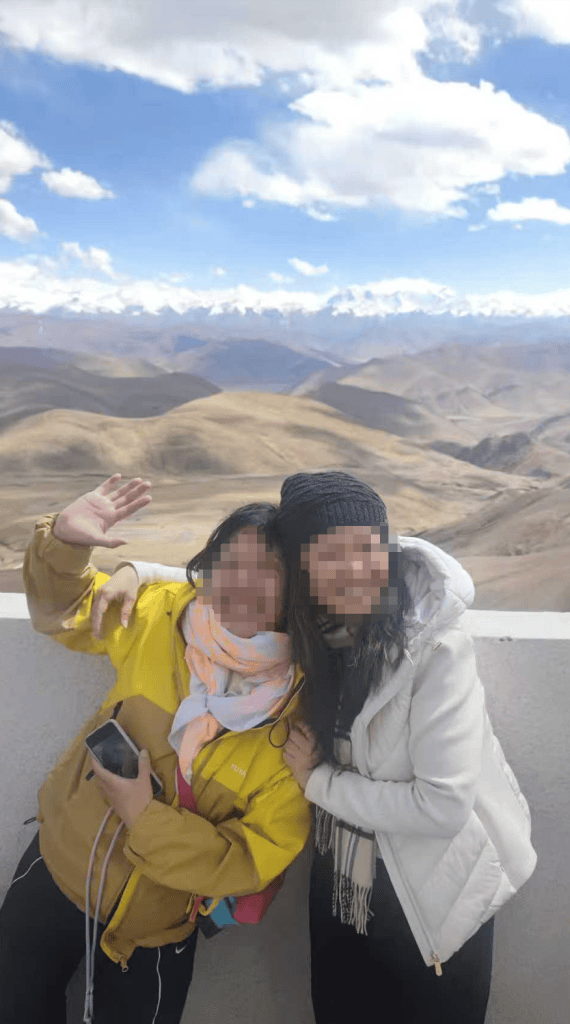
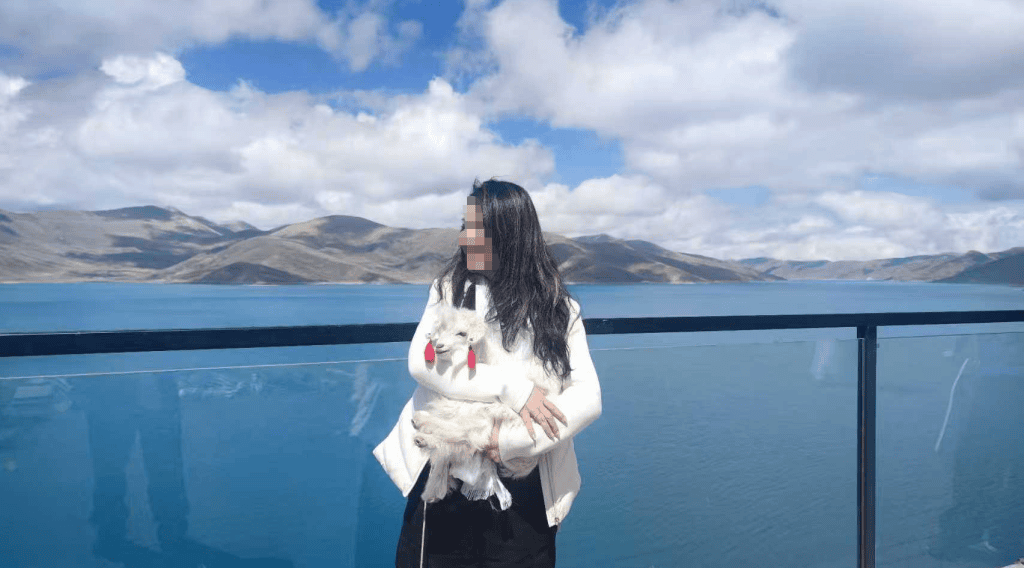
At the pass above the holy lake, prayer flags snapped in the wind and the lake surface shifted through several shades of turquoise as the cloud cover moved. This was the kind of weather luck travelers remember for years. Their photos from the viewpoint captured not only the color of the water, but the clarity of the day itself. The sisters were visibly more relaxed by then, no longer negotiating every breath the way they had in Lhasa. Plateau fatigue was still real, but it had become manageable, even companionable.
On the road, Dawa kept doing the work that often goes unnoticed by outsiders: checking how long each stop should be, pacing lunch so no one felt heavy before more driving, watching for wind chill at viewpoints despite the summer sun, and giving context to the terrain rather than letting the landscape pass as a silent backdrop. Snow mountains in the distance, broad brown-gold ridges, and the sacred water below made this segment feel larger than any single landmark stop.
Day 9-12 | A final northern arc and the warmth that stayed after the miles
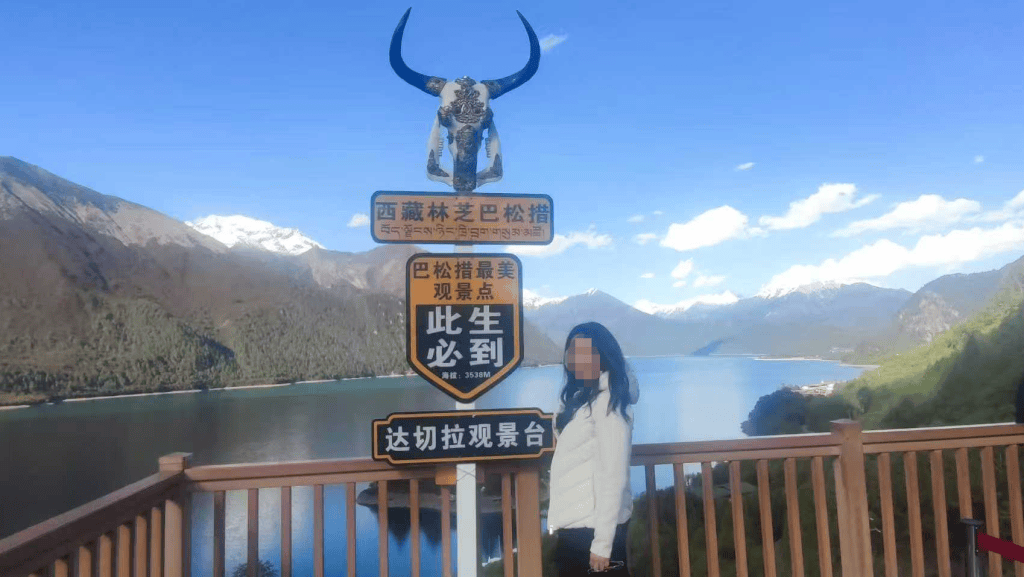
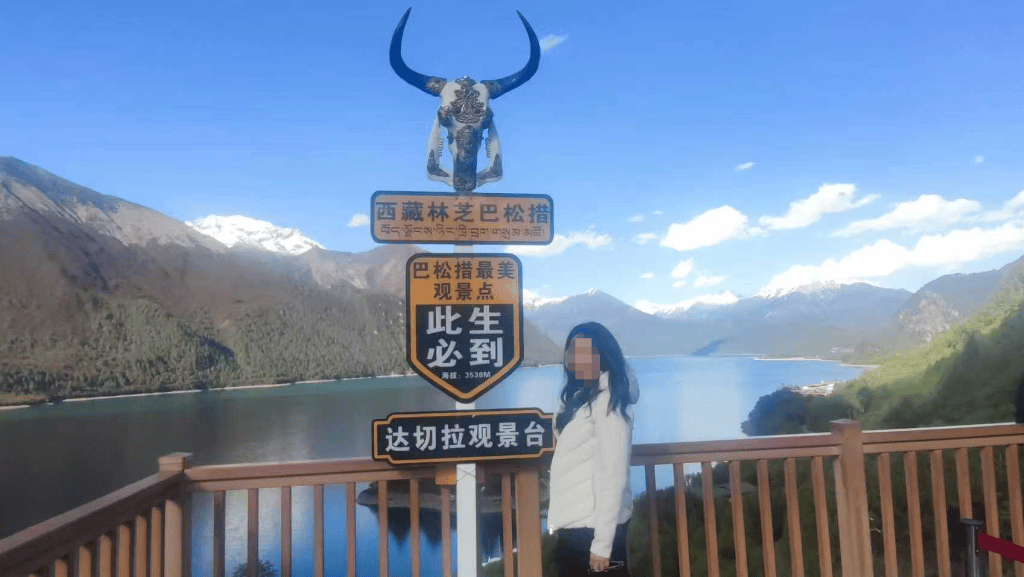
One of the most distinctive images from this journey came from Daqiela Viewpoint, where one of the sisters took an especially strong photograph that we still remember. The composition was clean, the light was crisp, and the wide mountain-and-water frame carried exactly the feeling of the trip’s middle days: high, clear, and unexpectedly calm after the earlier physical strain. By this stage, road fatigue had become part of the shared routine rather than an obstacle. The sisters knew when to rest, when to walk, and when simply to stand still and look.
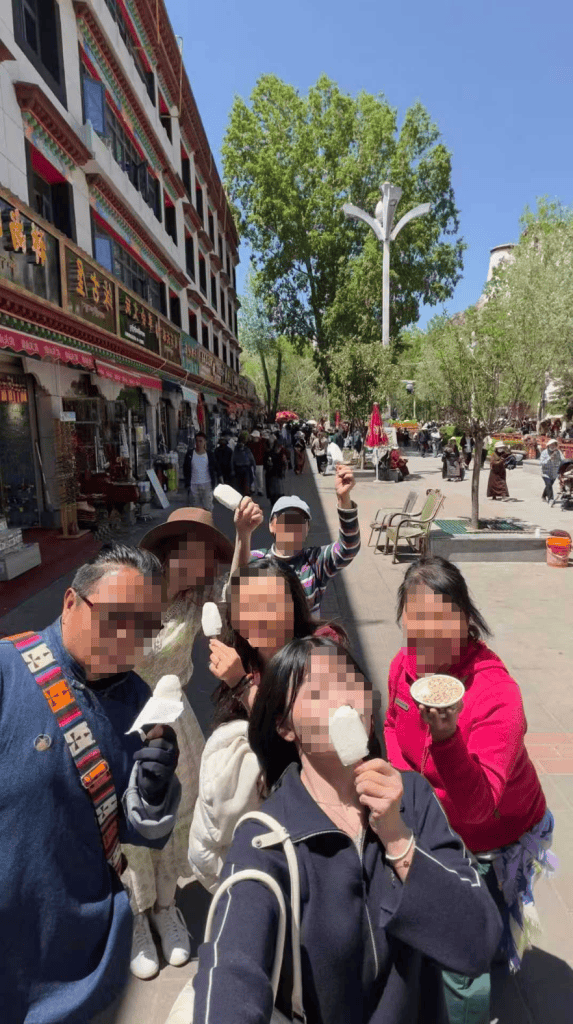
There was also a softer side to the journey that stayed with our team. Along the way, they spent easy moments with Dawa over ice cream and yogurt, which felt especially fitting in Lhasa’s warm July afternoons. Before departure, they even brought chocolate from Austria for both our office side and for Dawa. For us, these details matter because they reflect the real shape of a successful Tibet trip: careful operations, yes, but also genuine human ease after many days on the road together.
By the end of the 12 days, what stood out was not one single monument. It was the arc. They arrived facing the sharp edge of altitude, learned to move more slowly through Lhasa, deepened their understanding of Tibetan history and Buddhism through direct experience, and then carried that understanding out into the lake country and mountain viewpoints under good summer skies. It was exactly the kind of first Tibet visit we try to build through custom route design: grounded, paced correctly, and guided by people who know when to explain more and when to leave space.
Verified Operation Record
Starbright Booking Ref: STJ-2026-3568-AT. This journey was operated by our local Tibet team as a private July custom trip for three travelers from Austria, with photo-verified stops including Daqiela Viewpoint, Sera Monastery, Jokhang Temple, the Potala Palace, and the holy lake route.
Real Photos
Image Gallery

Traveler Quote
What This Journey Proved
"A carefully paced 12-day first Tibet visit helped three Austrian sisters move from early altitude strain to a warm, culture-rich journey across Lhasa and the plateau."
Practical Travel Tips
Practical Travel Tips From This Journey
- For a July arrival in Lhasa by flight, keep the first day light and prioritize sleep, hydration, and slow walking rather than trying to cover major sites immediately.
- Summer in Tibet means strong UV even on mild days. Bring a sun hat, sunglasses, lip protection, and one warmer outer layer for windy viewpoints above the lake route.
- At major landmarks such as the Potala Palace and Jokhang Temple, early timing helps with both crowd flow and breathing comfort before the midday sun strengthens.
- On longer scenic drives, keep water and light snacks within reach and use every planned stop well. Plateau road fatigue builds gradually, even when the weather is good.
- For first-time travelers, ask your guide to check room humidity on the first night in Lhasa. Small comfort adjustments can noticeably improve breathing and rest at altitude. For broader preparation, we also recommend reviewing permit steps and the CDC high-altitude guidance before departure.