
Tibet Photography Guide: Best Places, Camera Rules, and Drone Restrictions
What matters most before you pack a camera for Tibet
If you are planning a Tibet trip mainly for photos, the real decision is not just where to shoot. It is how to choose stops that are visually rewarding, how to avoid friction around monasteries and religious activity, and whether a drone is worth the trouble at all.
For most travelers, the reliable plan is simple: prioritize strong ground photography, build in the right light at a few proven locations, and treat drone use as a restricted, low-certainty option. That approach usually produces better results than carrying too much gear or assuming every scenic place will be open to every kind of shooting.
Tibet is highly photogenic, but photography conditions change with route, season, weather, monastery rules, and local enforcement. This guide stays focused on the decisions that affect your trip most: the best types of photo stops, camera etiquette, drone limits, and gear choices that still make sense at altitude.
Where photography in Tibet is most rewarding
The strongest Tibet images usually come from contrast: monumental architecture in Lhasa, pilgrimage movement around sacred sites, high lakes, wide valleys, and long road sections where weather changes quickly. Choosing the right mix depends on whether your route is city-focused, monastery-focused, or landscape-heavy.
Lhasa for landmark and street photography
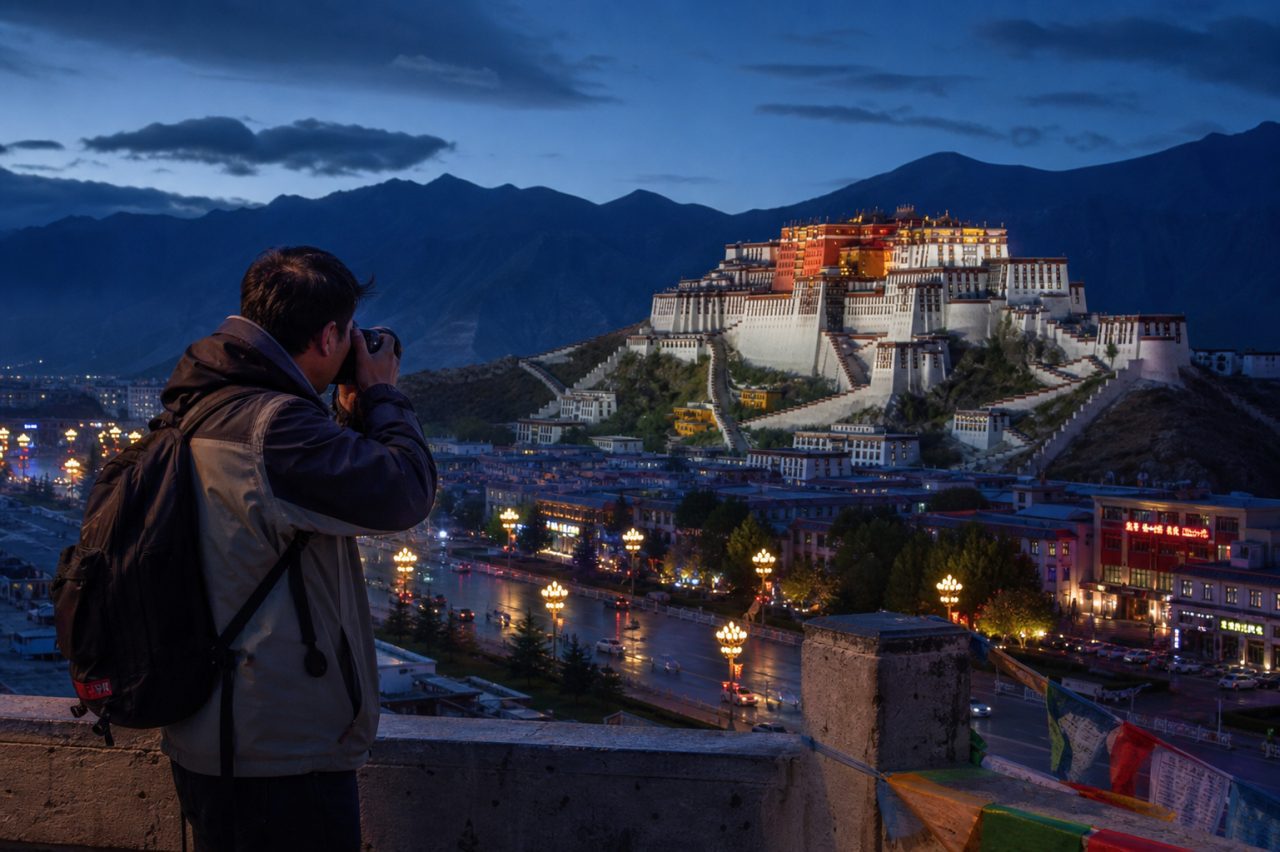
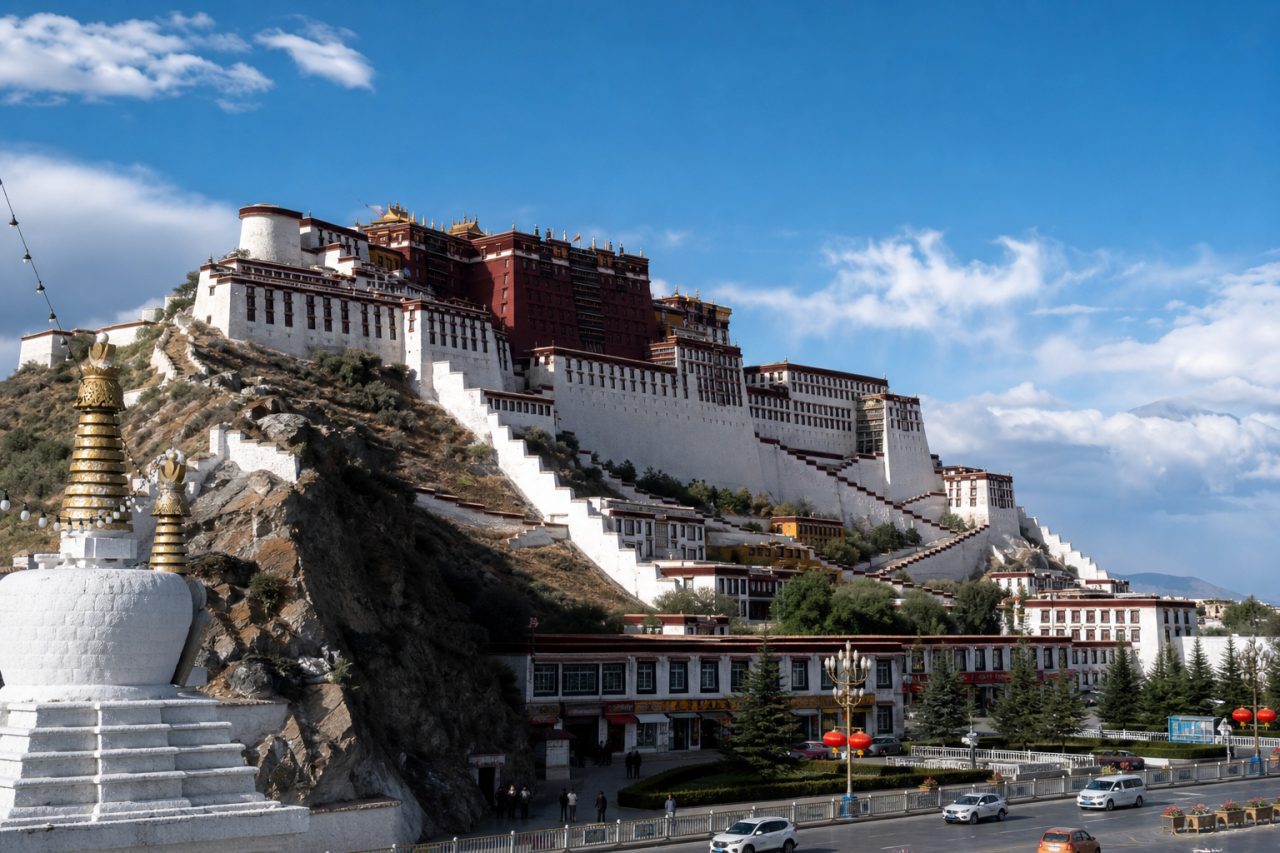
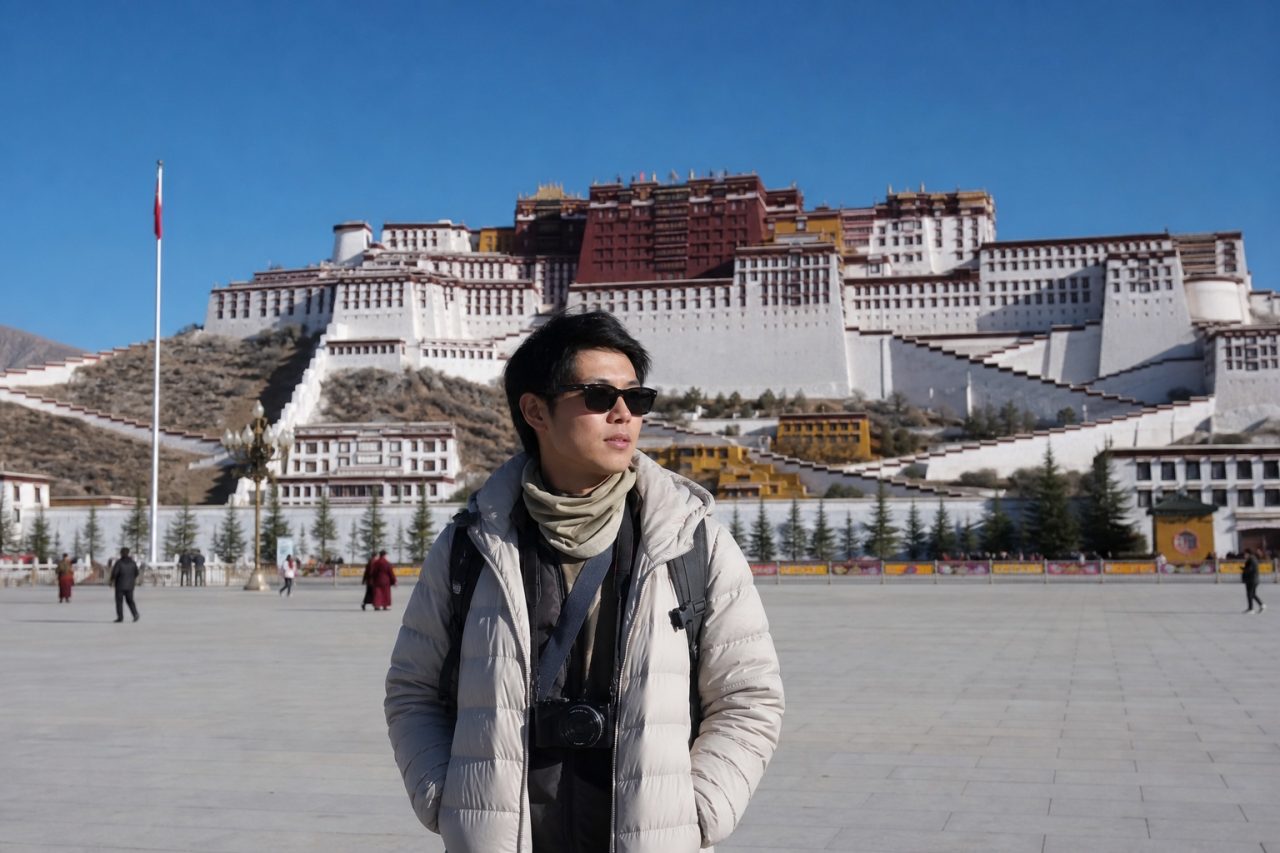
Lhasa gives most first-time visitors the highest return per day of travel. Potala Palace is the obvious anchor, but the better photo plan is to shoot it from more than one distance: a formal city viewpoint, a wider urban scene at blue hour, and a quieter morning or late-day angle if your schedule allows.
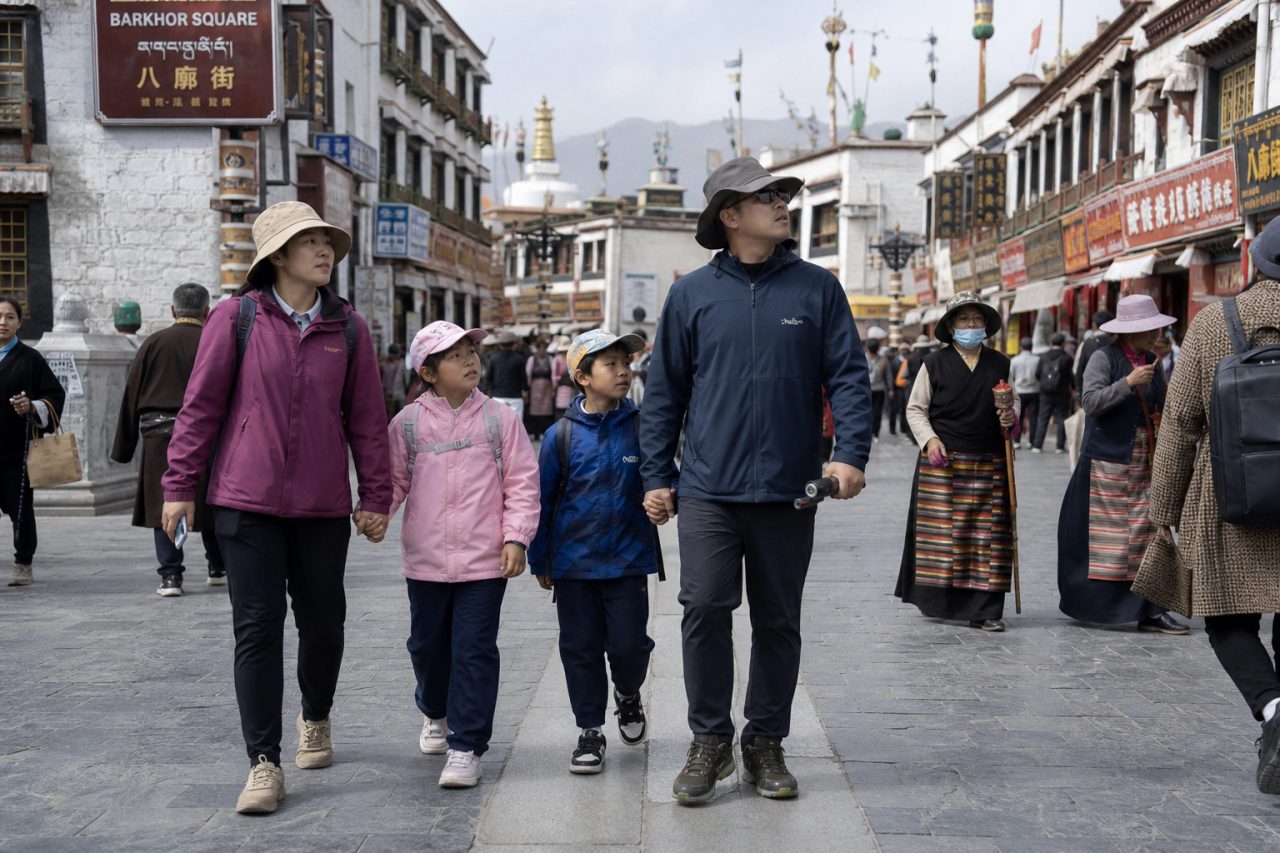
Jokhang Temple and Barkhor are usually more important for human atmosphere than for postcard composition. Pilgrims, incense, shopfront textures, and movement around the kora often create stronger images than trying to force one more front-facing temple shot.
Yamdrok Lake for open landscape images
Yamdrok Lake is one of the easiest places to get large-scale landscape photographs without complicated trekking. The value here is not just the water color. It is the layered composition of lake, road, mountain slope, and changing sky.
If you are traveling in summer, cloud and road conditions matter. For route planning, see Tibet travel in July and August, which explains how rain, mudslides, and variable visibility can affect timing and movement.
Shigatse and monastery zones for cultural depth
If your route includes Shigatse or major monasteries, the value shifts from broad scenery to texture, ritual space, and scale. These stops suit travelers who want more than landmark photos and are willing to work carefully around rules and ceremony.
This is where restraint matters. Some of the most meaningful images in Tibet come from courtyards, exterior walls, prayer flags, approach roads, or pilgrim movement outside the main hall rather than inside sacred rooms.
Everest route for scale, not convenience
The Everest side of a Tibet trip can produce the most dramatic mountain images, but it is not the easiest photo segment. Wind, altitude, long road days, and changing visibility mean the result is less predictable than many travelers expect.
Choose this route if mountain scale is a core goal, not if you simply want to add one famous name to the itinerary. A tighter Lhasa and lake route often produces a more relaxed and productive photography trip for first-time visitors.
How to choose the right photo stops for your route and season
Do not build a Tibet photography plan by counting attractions. Build it around shooting windows. One or two strong dawn or late-day stops usually matter more than five rushed scenic check-ins.
If you are comparing travel styles, a group tour vs private custom tour decision affects photography more than many travelers realize. Group tours can work well for major landmarks, but private planning gives you more control over roadside stops, pace, and early or late light.
For photographers, the best route usually depends on three factors: how much flexibility you need, how well you handle altitude, and whether your priority is architecture, people, or landscapes. Travelers who care mainly about iconic city images can keep the trip more compact. Landscape-focused travelers usually need to accept more road time and more weather uncertainty.
If timing and pacing are important to you, it is worth asking route-specific questions before booking. This is one reason the article How to Choose a Tibet Tour Company is relevant for photographers: guide quality matters, but so do stop length, departure time, and whether scenic pauses are realistic.
Camera etiquette at monasteries, pilgrimage sites, and in local streets
Still photography is often manageable in Tibet when done respectfully, but it should never be treated as automatic everywhere. Rules can vary by monastery, by room, by ceremony, and by what staff allow on the day.
Assume interiors may be restricted
Many monasteries and temple interiors are sensitive spaces. Even where photography is allowed in some areas, certain halls, altars, monks at prayer, or ritual moments may be off-limits or inappropriate to photograph.
The practical rule is to ask before shooting indoors and to follow the most local instruction available from your guide or site staff. If the answer is unclear, skip the shot and work outside. In Tibet, exterior detail and atmosphere often give you stronger images than a hurried interior photo taken under tension.
Be careful around pilgrims and prayer activity
Pilgrimage is not a performance for visitors. A long lens, close framing of prostrations, or aggressive phone shooting can feel intrusive even in a public area.
Many first-time visitors consider candid shots the highlight of Tibet, but distance and context matter. Wider images that show movement, place, and ritual space are usually more respectful than close-up face shots taken without clear permission.
Street photography works better with patience than speed
In markets and old streets, a calm pace usually gets better results than rapid-fire shooting. Pause, observe, and avoid blocking walkways or turning every interaction into a camera moment.
If someone clearly does not want to be photographed, move on. A respectful miss is better than one image that creates friction for you, your guide, or other travelers.
What to expect from drone restrictions in Tibet
Drone planning in Tibet should be conservative from the start. In China, civil drone operation is regulated under the Civil Aviation Administration of China, and operational compliance can involve registration, airspace controls, and no-fly restrictions depending on drone type and location. The official authority is the Civil Aviation Administration of China: https://www.caac.gov.cn/.
That official framework is only part of the picture for Tibet travelers. Local enforcement, sensitive zones, and site-specific restrictions can make legal use difficult even when a traveler assumes the landscape looks open. Around major religious sites, urban landmarks, border-sensitive regions, and protected areas, restrictions may be stricter or practically unusable on the ground.
The safest conclusion is this: do not assume that bringing a drone means you will be able to fly it where the scenery is best. Before relying on aerial plans, confirm current requirements with your operator, ask whether your specific route includes any zones where drones are clearly unsuitable, and check the latest CAAC rules before departure.
When a drone is not worth bringing
For many Tibet trips, a drone is more burden than advantage. If your route is centered on Lhasa, monasteries, and standard overland sightseeing, ground photography usually gives a better return with less risk and less time spent chasing permissions or uncertain flight conditions.
A drone is often a poor fit if you are on a tight schedule, traveling in a group, visiting sensitive religious areas, or not comfortable with the chance that you may carry it for days without using it. The same applies if your main goal is cultural photography rather than wide aerial footage.
The travelers most likely to justify bringing one are those on a flexible, photography-first itinerary who already understand Chinese drone compliance requirements and accept that some planned shots may still be impossible. That is a narrow use case, not the default one.
Gear, batteries, and daily shooting planning at high altitude
In Tibet, a lighter kit is usually the smarter kit. One camera body, a versatile zoom or a two-lens setup, spare batteries, lens cloths, and practical carrying protection often outperform a heavy professional loadout once altitude, stairs, and road transfers start to accumulate.
Batteries can drain faster in cold mornings and exposed high-altitude conditions, so carry more than you think you need and keep spares warm and accessible. If your trip includes long drive days, charge whenever the opportunity is reliable rather than assuming the next stop will be simple.
For most travelers, the one mistake to avoid is overpacking specialist gear for imagined shots while underplanning for light, weather, and pace. A realistic Tibet photography plan is built on flexibility, respect, and energy management, not on the largest possible equipment list.
A practical photography plan that usually works
If you want the clearest path, use this order: choose a route with two or three high-value photo environments, ask in advance how much timing flexibility your trip allows, treat monastery interiors and religious activity as permission-based, and make your drone decision last rather than first.
That approach keeps expectations realistic and still leaves room for strong results. Tibet rewards photographers who are patient, observant, and willing to simplify.
If you want help shaping a photography-friendly route, Tibet Journeys can help you plan an itinerary with the right balance of landmark stops, landscape windows, and realistic shooting time.
Seasonality
Dynamic Trust & Reassurance Block
Use this article as a planning reference, not a final commitment
Seasonality
For "Tibet Photography Guide: Best Places, Camera Rules, and Drone Restrictions", the best choice can shift with season, weather, road access, scenery and crowd levels.
Decision support
Use this article to compare when the experience is likely to match your comfort expectations and visual priorities.
Before you commit
Before committing, confirm current road access, hotel availability, weather patterns and seasonal limits for your exact dates.
Last reviewed: July 19, 2026
Match Dates to RouteSeason-based planning
Want the right Tibet route for your season?
We can help match your travel month with realistic scenery, road access, comfort level and route choices.
Match Dates to RouteYou Might Also Like
Jul 22, 2026
Tibet with Kids: Family-Friendly Routes, Age Limits, and Comfort Planning
Planning Tibet w…
Jul 22, 2026
Tibet Travel Insurance Guide: What Policies Should Cover for Remote Trips
Choosing Tibet t…
Jul 21, 2026
What to Wear in Tibet by Month: Packing for Lhasa, Everest Base Camp, and Kailash
Month-by-month T…
Common Questions
Questions Readers Usually Ask Next
These answers close the practical questions still left after this guide, so you can decide what to do next without another search.
Can you take photos inside monasteries in Tibet?
It depends on the specific monastery, the room, and what is happening at the time. Outdoor areas may be more permissive than prayer halls or active religious spaces, but rules can vary by site and day. The practical approach is to ask your guide or site staff before shooting inside and be prepared to put the camera away during ceremonies or in restricted interior spaces.
Is phone photography usually treated differently from using a larger camera?
Sometimes the reaction is more about where and when you are shooting than the device itself. A phone can feel less intrusive in busy public areas, but it does not automatically override restrictions in monasteries, ceremonies, or controlled sites. Use the same etiquette either way and ask when the setting is sensitive.
Do camera batteries drain faster in Tibet's cold mornings and high altitude?
Cold early starts can reduce battery performance, so carrying spares and keeping them warm until needed is a practical precaution. Long road days and limited charging windows can matter more than altitude alone, which is why a simple charging plan and backup batteries are usually more helpful than carrying extra gear bodies.
Can a guide help confirm local photography or drone restrictions on the day?
Yes, a guide is often the most practical point of confirmation for local conditions, site etiquette, and whether a planned stop is suitable for photography that day. For drones, guide input helps with local practicality, but it should not be treated as a substitute for official aviation and site-specific rules.